Booking informationDirect Call Mobile @ 977-9851267334 +977-9828933867Viber or Whatsapp @ +977- 9851267334Email: [email protected] ,or, [email protected] and Porter Hire Everest Base Camp Trek, Hire Guide from Lukla for Everest Trekking is the service provided by us. It is to help trekkers who want to explore Everest Base Camp on their own by just hiring a guide or hiring a porter. We have about 20 different guides and porters working under us. You can choose the guide and porter according to your choice from Lukla.Price for hiring a guide, Guide/porter or porter for Everest Base camp or any corner of the Everest region trek.Guide: US$ 30 per day,Guide/porter: US$22,per day,If you want to add also porter then;-Porter wages is US$:20 per day,Price will include their wages, Meals,Accommodation, Insurance,equipment,and salary.Guide and Porter Hire Everest Base Camp Trek,Hire Guide from Lukla for Everest Trekking It is highly recommended that you have to travel to upper Himalayan region of Nepal with experienced guides. In case of emergencies if you need to be brought back to low altitude guide and porter will be very helpful. You don’t have to worry about booking hotel and finding the way on the trail. Moreover, guides and porters are more familiar about the scenario. This results in trekkers to have reliable and safe trekking adventure. The moraines, glacier and snow covered trails might require local knowledgeable person to accompany you. Get very experienced guide with government license training. Upon doing this you will not be the victim of tourists trap.Proper walking hours, planning and acquaintances with the surrounding forests, hills, mountains, trails and local traditions should be well known by Guide. This will endow you the momentous time of traveling by understanding the various features of the Everest Khumbu region. Hire a guide and porter from Lukla with Nepal Adventure pilgrimage Trek. Guide and Porter Hire Everest Base Camp Trek , Hire Guide from Lukla for Everest Trekking Everest region has many trekking routes with fantastic mountain sceneries. Therefore, lots of trekkers from across the globe are fascinated to visit the locale. However, some of the trekkers might find it hard to pay the expenses of guides to take them from Kathmandu to Lukla. Therefore, we have arranged the program of hiring the guides and porter from Lukla. Here are the details of the trekking route in which we offer the guide and porter hire services from Lukla.Everest Base Camp Trekking in Nepal is the most prominent and popular trekking course of Khumbu region. We have very qualified and license holder trekking guides and local porters to do job for you. Trekkers will find it very comfortable with the porters and guide as these people have been to Everest Base Camp frequently. Reaching the Everest Base Camp and watching sunrise from Kalapathar is not ordinary thing to do. It requires immense physical strength and will power. Having local support crew members will definitely aids for the better success rate.Everest Gokyo Lake trek or you can also term it as Everest Base Camp Chola Pass Trek. Hire guide for EBC Chola Pass trek and walk through the moraines, high altitude pass covered by snow and Himalayan terrain with ease by hiring the local guide from Lukla.Three High Passes Trek is another splendid yet challenging trekking route of the region. The cost of the trekking guide hiring from Kathmandu might be very high as trekkers have to cover the airfare of the guide as well. Therefore, our team will manage the guide from Lukla. You just have to travel to Lukla airstrip and our guide will pick you up at the airport.Remember us for any kinds of trekking adventure in Everest region of Nepal. You can get Guide and porter Hire Everest Base camp trek by us. We also serve a guide or porter from Lukla for Everest Base Camp Trek, Everest View Trek, Everest Three High Passes Trek, Gokyo Lake EBC Trek and other customized Everest region trekking in Nepal. Please call us or mail us for the more details.Why you'll love this trip?Our Everest base camp trek itinerary is carefully crafted to ensure that you have ample time to acclimatize to the altitude, reducing the risk of altitude sickness and ensuring that you can fully enjoy the experience.You will have the opportunity to visit local villages and ancient monasteries, getting a glimpse into the daily lives of the Sherpa people and their rich cultural heritage.The Everest base camp trek also includes optional side trips to Hotel Everest View (3,962 m), Nagarjun Hill (5,100 m), Kala Patthar (5,545 m), and other stunning vantage points that offer unparalleled sceneries of the Himalayan peaks like Everest (8,849 m), Lhotse (8,516 m), Nuptse (7,861 m), Ama Dablam (6,812 m), Thamserku (6,608 m), Pumori (7,161 m), etc. Our team of guides and porters is well-equipped with high-quality gear and equipment, ensuring that you can trek in comfort and safety.We also prioritize responsible waste management and environmental conservation, ensuring that our treks are sustainable and leave a minimal impact on the natural environment.The Everest base camp trek in Nepal is suitable for all levels of fitness and experience. You can do this trek with your family and friends. A typical day during the Everest base camp trek One thing that remains constant during the Everest Base Camp trek is the daily routine. Each day starts and ends similarly, providing a sense of structure and comfort amidst the rugged terrain. Beginning at 6 or 7 am, the group meets for breakfast in the lodge's dining room. Breakfast is pre-ordered the night before to ensure timely service. Following breakfast, the porter takes care of the duffle bag, leaving you with just a day pack filled with essentials like water, sunscreen, and snacks. The day's hike is then led by your knowledgeable guide, who highlights the day's key features before you hit the trail. We take a break for lunch at a small settlement along the trail and then continue the journey toward the next overnight lodge. At the lodge, we wind down by socializing with other trekkers or writing in our diaries. The guide will then outline the upcoming route and landscape over dinner, which is pre-ordered to your preference. Don’t forget to order breakfast before heading off to bed for the night.Why join Everest base camp trek 2023/2024 with Nepal Adventure Pilgrimage?In today's fast-paced world, not everyone has the luxury of time to spend in the lap of the highest mountains and share their experiences with others. At Nepal Adventure Pilgrimage, we have an experienced team of high-altitude mountain guides who have led hundreds of trekking groups to their destinations. We take pride in offering customized Everest base camp trekking packages that cater to tourists of all age groups and fitness levels. Whether you're a seasoned trekker or a beginner, we've got you covered. Our 14-day Everest Base Camp trek package is designed to offer a once-in-a-lifetime experience, but we also offer the flexibility to customize your Everest base camp trek itinerary depending on your preferences. If you have the time and budget, you can extend your EBC trek and spend more days in the mountains, exploring the serene beauty of the Himalayas at your own pace. So, what are you waiting for? Book your Everest Base Camp trek 2023/2024 with Nepal Adventure Pilgrimage and make memories that will last a lifetime!Other adventurous trekking packages in NepalWe have a wide range of treks, tours, and expedition packages in Nepal that lets you explore the mainstream trekking routes to the isolated, offbeat trails and the hidden corners. In the Everest region itself, we have quite a range of trekking and climbing packages available, like the Gokyo Lakes trek, Everest Panorama trek, Everest Three High Passes trek, Everest Base Camp Helicopter Tour, etc. Likewise, here are some other hand-picked trekking packages for you in Nepal- Langtang Valley trek, Annapurna Circuit trek, Manaslu Circuit trek, Mardi Himal trek, Khopra Danda trek, Upper Mustang trek, Ghorepani Poon Hill trek, and Langtang Gosaikunda trek.Feel free to contact us at [email protected] or +977 9851267334 if you have any queries. Our itineraries are flexible, so you can tailor design any package with us as per your requirements. Everest base camp trek difficulty & altitude sicknessIn terms of difficulty, the trek to Everest Base Camp is challenging due to the high altitude and rugged terrain. The trek covers a distance of around 130 km (81 miles) round trip and involves several steep ascents and descents, including the famous climb up to Kala Patthar at an altitude of 5,545m (18,192 ft). Trekkers will also need to cross suspension bridges, rocky paths, and uneven terrain, which can be physically demanding. The Everest base camp trek is accessible to people with good physical fitness and no serious health issues. Trekking experience is not mandatory, but it can be helpful to have prior hiking experience to prepare for the trek.The high altitude and potential for altitude sickness make the EBC trek challenging. Altitude sickness, also known as acute mountain sickness (AMS), occurs when your body struggles to adjust to the decreased oxygen levels at high altitudes. The symptoms can include headache, nausea, dizziness, fatigue, and shortness of breath.To minimize the risk of altitude sickness, it's important to acclimatize properly by spending a few days at different altitudes before reaching the highest points of the trek. You have to stay hydrated, avoid alcohol and smoking, and listen to your body & rest when necessary. In case of severe symptoms, descend to lower altitudes immediately.How can solo travelers do the Everest base camp trek?Solo travelers can join one of our fixed departures for Everest base camp trekking or opt for a private trek with us. Fixed departures are group treks, so you will be joined by other travelers from around the world. If you like making friends and socializing, this will be a perfect option for you. For travelers who prefer trekking alone and have their own schedule, you can go for a private trek with us. A private trek will allow you to trek solo with an expert guide and a porter. As the Everest base camp trek solo is banned from 1st April 2023, this is the best you get close to trekking alone to the lap of the highest mountain in the world. Best time to do Everest base camp trekEverest Base Camp is located in the Khumbu region of Nepal, which experiences four distinct seasons: spring (March to May), summer/monsoon (June to August), autumn (September to November), and winter (December to February). The weather and climate conditions can vary greatly depending on the season. Spring and autumn is the best time to do Everest base camp trekking. Everest base camp trek in springSpring is the peak trekking season in the Everest region as the weather is generally dry and mild with moderate temperatures. The daytime temperature can range from 10°C to 20°C (50°F to 68°F), and the nighttime temperature can drop to -10°C to -5°C (14°F to 23°F) at higher altitudes. However, it can be quite windy and dusty, and there is a possibility of occasional snow or rainfall. Spring decorates the entire trail with blooming flowers and teeming vegetation. Everest base camp trek in summer/monsoonThis season brings the monsoon rains to the region, making the trail muddy and slippery. The daytime temperature can range from 15°C to 25°C (59°F to 77°F), and the nighttime temperature can drop to 0°C to -5°C (32°F to 23°F) at higher altitudes. We do not recommend the Everest base camp trek in the summer/monsoon season due to the heavy rainfall and the possibility of landslides and flooding. The Lukla flight is also frequently delayed and canceled because of bad weather. Everest base camp trek in autumnAutumn- September to December is another peak trekking season as the weather is dry and stable with clear skies and great visibility. The daytime temperature can range from 10°C to 20°C (50°F to 68°F), and the nighttime temperature can drop to -10°C to -5°C (14°F to 23°F) at higher altitudes. This is the best season to enjoy the stunning mountain views and experience the local culture. Likewise, you may also get to see the biggest festivals of Nepalese people in this season. Everest base camp trek in winterWinter is the coldest and driest season in the Everest region. The trail can be covered in snow and ice. The daytime temperature can range from 5°C to 10°C (41°F to 50°F), and the nighttime temperature can drop to -20°C to -10°C (-4°F to 14°F) at higher altitudes. This season is not recommended for novice trekkers as the trail can be quite challenging and hazardous due to the harsh weather conditions. If you want to do the Everest base camp trek in the winter season, you have to be extra prepared.Accommodation & meals during the Everest base camp trekThere are several tea houses and lodges along the Everest base camp trekking route that provide accommodation to trekkers. These lodges offer basic rooms with a bed, blankets, and pillows, and most of them have shared toilets and washing facilities. Some lodges may also offer hot showers for an additional fee. Carry a sleeping bag for added comfort and warmth. Our team will book clean and comfortable accommodations for you to spend nights during the trek.Most lodges along the trekking route offer a wide range of meals, including Nepali, Indian, and Western cuisine. The meals include breakfast, lunch, and dinner and are served in a communal dining hall. Popular dishes include dal bhat, momo, and noodle soup. Stick to vegetarian options as they are safer and less likely to cause stomach problems. We also recommend you bring energy bars or snacks for extra energy during the trek.Everest base camp trek travel insuranceTravel insurance is essential for the Everest base camp trek as it provides coverage for any unexpected medical emergencies, trip cancellations or delays, and other unforeseen circumstances that may occur during your trip.The Everest base camp trek is a high-altitude trek, and the risk of altitude sickness, injuries, and accidents is always present. In case of any medical emergencies, travel insurance can provide coverage for medical expenses, emergency medical evacuation, and repatriation. Make sure that your insurance policy includes coverage for high-altitude trekking and air evacuation, as some policies may exclude coverage for such activities.Nepal visa information Foreign visitors to Nepal need a visa to enter the country. Visas can be obtained on arrival at the Tribhuvan International Airport in Kathmandu or the land border crossings with India and China.The visa fee depends on the length of stay and the type of visa but generally ranges from $25 to $100. Visitors can apply for a 15, 30, or 90-day visa. There are also multiple-entry and single-entry visas available.To apply for a visa on arrival, visitors will need to fill out an application form, provide a passport photo, and pay the visa fee in cash. You need to have a valid passport with at least six months of validity remaining. Alternatively, visitors can apply for a visa at the Nepalese embassy or consulate in their home country before traveling to Nepal.Money ExchangeThe official currency of Nepal is the Nepalese rupee (NPR). US dollars are also widely accepted, especially in tourist areas. It's recommended to carry a mix of Nepalese rupees and US dollars while traveling in Nepal.Money exchange services are available at banks, hotels, and authorized currency exchange centers in major cities and tourist areas. Exchange money at authorized exchange centers to avoid being scammed or receiving counterfeit currency.ATMs are also available in major cities and tourist areas, and most of them accept international debit and credit cards. However, do carry some cash as a backup in case of any issues with the ATM.Travel tips for Everest base camp trekking1: ATM: There is an ATM in Namche Bazaar and Dingboche where you can withdraw Nepali cash to use during the trek. 2: Luggage: Pack light and bring only the essentials for the Everest Base Camp trek. Follow our packing checklist for the EBC trek. We use a duffel bag during the trek, and each trekker gets a 10 kg weight limit. If you are left with any additional luggage, lock it nicely and store it in our office for free of cost. Likewise, the backpack weight limit is 5 kg. 3: Tips: Tipping is a common practice in Nepal's travel industry. It's customary to tip your guide and porters at the end of the trek. The amount of the tip depends on the quality of service provided, but a general guideline is to tip 10% of the total cost of the trek.4: Charging: Charging facilities are available at most tea houses and lodges along the trekking route. You can also bring a portable power bank and extra batteries for your electronic devices, as the charging facilities may not always be reliable and cost you some extra bucks.5: WiFi/Communication: WiFi is available at some tea houses and lodges along the EBC trek route, but the quality and reliability may vary. The best option is a local SIM card for your phone to stay connected with family and friends. Our team will help you buy a tourist sim with ample data to use during the trek. 6: Personal Expenses: Personal expenses such as tips, snacks, drinks, and souvenirs can add up quickly during the trek. Carry some cash and budget accordingly for personal expenses. We also advise you to have an emergency budget.7: Hot Shower: Hot showers are available at some tea houses and lodges along the trekking route for an additional fee. However, be mindful of water usage and conserve water whenever possible.8: Laundry: Laundry facilities are available at some tea houses and lodges along the trekking route for an additional fee. It's better to carry enough clothes to last you till the trek ends and wash them when you are back in Kathmandu. Our Everest base camp trek cost refund policyThank you for considering our travel company for your Everest Base Camp trek. We are committed to providing our clients with a safe, enjoyable, and memorable trekking experience. Our pricing for the Everest Base Camp trek includes all necessary permits, transportation, accommodation, meals, and the services of an experienced guide and porter.We understand that unexpected situations may arise that could prevent you from completing the trek or starting the trek on the planned date. In such cases, our refund policy is as follows:Cancellation by the Client: If you need to cancel your trek for any reason, please inform us as soon as possible. We will refund your deposit minus any non-recoverable costs incurred by our company, such as permit fees, transportation costs, or advance payment to lodges.● Cancellation 60 days or more before the trek start date: 90% of the total trip cost will be refunded.● Cancellation between 30 and 59 days before the trek start date: 50% of the total trip cost will be refunded.● Cancellation less than 30 days before the trek start date: No refund will be provided.Everest Region Travel & Adventure Blog HighlightsAmazing Facts About on the Everest Base Camp TrekA Complete Guide to Everest Base Camp Trekking from May to Marchwhy we trek to nepal adventure pilgrimage with everest base camp?Top Highlights of the Everest View Short TrekEverest Three Passes Trekking in Nepal: Crossing Kongma La, Cho La and Renjo La Adventure Above 5,000mLangtang Trekking vs Everest Panorama TrekkingBest Time To Visit Everest Base Camp TrekGet ultimate trekking experience in the Everest region Trek 2022Tenzing Hillary AirportSherpa Villages and Everest Region: Must Do Trek in Nepal!Top 3 Treks to do in Autumn Season in NepalMake Your Trip More Unforgettable With Adventurous ThingsTrekking in Nepal in AugustTrekking In Nepal In MayTrekking in Nepal in AprilTrekking In Nepal In October 2022/2023Trekking in Nepal in September10 Most Beautiful Places In Nepal That You Should Visit OnceTour Packages in Nepal - How to get the Best?Trekking in the thin Air you can do it,with Nepal Adventure Pilgrimage TrekTop Hidden Gems in Nepal to Explore in 2026
Hundreds of flowers sewed together in one garland and hundreds of musical instruments stringed together in one folklore song are the essence of Nepal as multiethnic diversified country. Nepal is not only renowned for its Himalayas and natural beauty but also equally captivating with different rich traditional cultures of people. Tamang Heritage Trek package offered by Nepal Adventure Pilgrimage Treks & Expedition too focuses on promoting the culture and traditions of the ethnic Tamang and Lama people of the Langtang region. Embark on this anthropological trekking in Nepal and experience the great traditions of this Himalayan people.Blend with the Tibetan origin of people along with the Lamas/Moktans/Tamangs of the Langtang in this joyous journey taking you to some of the spectacular places of the Langtang region trekking and Ganesh Himal Trekking. During the Tamang Heritage Trek trekkers find the natural wonders nestled harmoniously in the expert guardianship of these intrepid people. The natural hot water springs to the communities and their terraced farmlands endow the unique opportunity to understand the root of these wonderful terrains. Villages like Gatlang, Briddim, Tatopani and others are the perfect hideaway destination to understand the true essence of the hilly and Himalayan lifestyle. Moreover, visual delights of the stunning Himalayas and detours along the forests, rivers and hilly landscape contribute in creating the marvelous moments of tramping in Nepal. The splendid view of the mountains like Langtang Lirung, Ganesh Himal, Gaurishankar, Shishapangma and others will add the gloss to this glorious anthropological trekking in Nepal.Together with the various trekking agencies of Nepal this route is being put forwarded as the next big thing in Nepal trekking. The mere reason behind Tamang Heritage Trek route being must trek trail is its diversity. From culture to the nature trekkers can enjoy to the fullest. Nepal Adventure Pilgrimage Treks & Expedition is delighted to present this package for our valued trekkers to enjoy the staged authenticity of the splendors of Langtang region of Nepal.Physical Conditions and Experience Requirements14 days Tamang HeritageTrek is considered as moderate. If you jog or perform morning walks regularly then it would not be any problem for you to walk on the trail. However, it is highly recommended that you should start doing mild exercises one month prior to your trekking date. This would help in creating best Himalayan walking holiday experience. Having said that, it should be noted Technical Skill are not needed. The major hurdle is an altitude. Therefore, person having past medical history of lung, heart and blood diseases are extremely advised to consult your doctor before embarking on this journey.Other adventurous trekking packages in NepalWe have a wide range of treks, tours, and expedition packages in Nepal that lets you explore the mainstream trekking routes to the isolated, offbeat trails and the hidden corners. In the Everest region itself, we have quite a range of trekking and climbing packages available, like the Gokyo Lakes trek, Everest Panorama trek, Everest Three High Passes trek, Everest Base Camp Helicopter Tour, etc. Likewise, here are some other hand-picked trekking packages for you in Nepal- Langtang Valley trek, Annapurna Circuit trek, Manaslu Circuit trek, Mardi Himal trek, Khopra Danda trek, Upper Mustang trek, Ghorepani Poon Hill trek, and Langtang Gosaikunda trek.Feel free to contact us at [email protected] or +977 9851267334 if you have any queries. Our itineraries are flexible, so you can tailor design any package with us as per your requirements. Tamang Heritage Trek difficulty & altitude sicknessThe Tamang Heritage Trek is a relatively moderate trek with maximum altitude of 3,870 meters at the top of the Nagthali viewpoint. However, altitude sickness can be a concern for some trekkers, particularly for those who have not acclimatized properly. It is essential to take appropriate precautions to prevent altitude sickness, such as drinking plenty of water, ascending slowly, and allowing time for acclimatization.The trek itself is not particularly strenuous, but it does involve several uphill and downhill sections, so it is important to have a reasonable level of fitness. The trail passes through traditional Tamang villages, rhododendron forests, and alpine terrain with spectacular views of the Himalayan range. Overall, the Tamang Heritage Trek is an excellent choice for those who want to experience the culture and scenery of the Langtang region without tackling a particularly difficult trek.How can solo travelers do the Tamang Heritage Trek?Solo travelers can definitely do the Tamang Heritage Trek, as it is a popular trekking route in Nepal and there are many resources available for independent trekkers. Here are some tips for solo travelers planning to do the Tamang Heritage Trek:1:Plan your itinerary: The Tamang Heritage Trek usually takes around 7-10 days to complete, depending on your pace and the specific route you take. You can find a detailed itinerary and route map online or in guidebooks to plan your trek.2:Obtain necessary permits: Solo travelers will need to obtain the necessary permits for the trek. You will need a TIMS (Trekkers' Information Management System) card and a Langtang National Park entry permit. You can obtain these permits in Kathmandu or at the trailhead in Syabrubesi.3:Bring necessary gear: Make sure to bring proper trekking gear, including sturdy hiking boots, warm clothing, a good quality sleeping bag, and a backpack. You can rent or buy gear in Kathmandu or at the trailhead.4:Hire a guide or porter: While it is possible to do the trek solo, hiring a guide or porter can make the experience safer and more enjoyable. A guide can help with navigation, provide cultural insights, and assist with any issues that may arise. A porter can carry your heavy backpack, leaving you free to enjoy the trek.5:Stay in tea houses: Along the Tamang Heritage Trek route, there are many tea houses and lodges where you can stay overnight. These accommodations usually provide meals and basic amenities, such as a bed and hot shower.6:Be prepared for altitude sickness: The Tamang Heritage Trek reaches an altitude of around 3,800 meters, so it is important to be aware of the symptoms of altitude sickness and take necessary precautions. Stay hydrated, take your time ascending, and be prepared to rest if you experience symptoms such as headache or nausea.Langtang Region Travel & Adventure Blog HighlightsLangtang Trekking vs Everest Panorama TrekkingDiscovering Culture and Nature on the Tamang Heritage TrekLangtang Valley Trekking in Nepal: A Complete Beginner’s GuideTop 3 Treks to do in Autumn Season in NepalMake Your Trip More Unforgettable With Adventurous ThingsTrekking in Nepal in AugustTrekking In Nepal In MayTrekking in Nepal in AprilTrekking In Nepal In October 2022/2023Trekking in Nepal in September10 Most Beautiful Places In Nepal That You Should Visit OnceTour Packages in Nepal - How to get the Best?Trekking in the thin Air you can do it,with Nepal Adventure Pilgrimage TrekTop Hidden Gems in Nepal to Explore in 2026
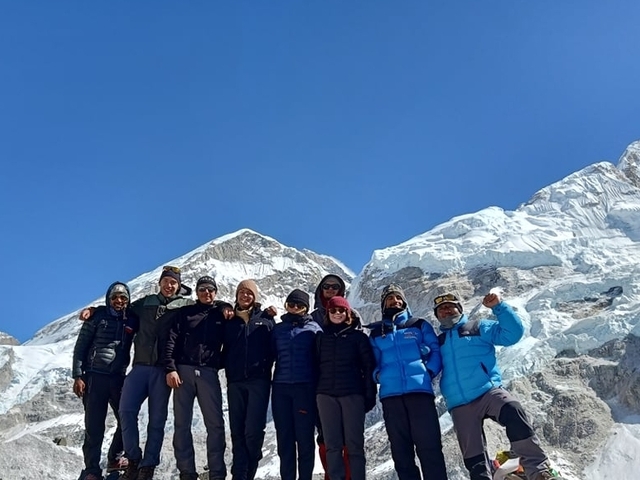
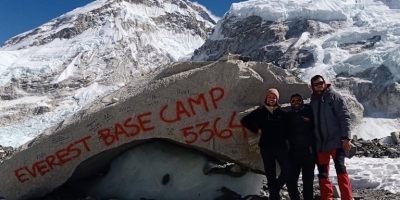
The Everest Base Camp Trek is a popular trekking route in the Nepalese Himalayas, leading to the base camp of the world's highest mountain, Mount Everest (8848m). The trek offers a chance to explore the stunning scenery of the Himalayas, including snow-capped peaks, glaciers, and alpine forests, as well as to experience the unique culture of the Sherpa people. The trek typically starts from Lukla and passes through villages such as Namche Bazaar, Tengboche, and Dingboche before reaching the base camp. The trek can take anywhere from 10 to 21 days, depending on the itinerary, and requires physical fitness and acclimatization to the high altitude. The best time to go on the trek is from September to November and from March to May.Everest Base Camp is the starting point for climbers attempting to reach the summit of Mount Everest, the highest peak in the world at 8,848 meters (29,032 feet) above sea level. It is located on the south side of the mountain in Nepal, and can be reached by a challenging trek through the Himalayan Mountains. The trek to the base camp is a popular adventure destination, attracting thousands of trekkers each year who come to experience the stunning natural beauty of the region and to see the iconic mountain up close. Along the way, trekkers will pass through traditional Sherpa villages, cross suspension bridges over fast-flowing rivers, and marvel at the views of some of the world's highest peaks. The base camp itself is a sprawling complex of tents and equipment, and serves as a hub for climbers as they make their final preparations for the ascent. Despite the challenges and difficulties of the journey, the experience of reaching the Everest Base Camp is considered by many to be one of the most rewarding and unforgettable adventures in the world.Mount EverestMount Everest, also known as Sagarmatha in Nepal and Chomolungma in Tibet, is the highest mountain in the world, standing at a height of 8,848 meters (29,032 feet). It is located on the border of Nepal and Tibet and is part of the Himalaya mountain range.Everest has been a source of fascination and awe for centuries, and has been the goal of mountaineers from all over the world since its first successful ascent by Sir Edmund Hillary of New Zealand and Tenzing Norgay of Nepal in 1953. Since then, thousands of climbers have attempted to summit Everest, and it has become one of the most famous and iconic mountains in the world.The ascent of Everest is a challenging and physically demanding endeavor, and requires a high level of physical fitness, technical climbing skills, and proper acclimatization to the high altitude. The standard climbing route to the summit of Everest follows the Southeast Ridge from Nepal, and involves climbing steep ice and snow slopes, as well as crossing several dangerous and exposed ridges.The climbing season on Everest typically takes place between April and June, when the weather conditions are the most favorable. During this time, hundreds of climbers, sherpas, and support staff converge on the mountain, creating a busy and crowded base camp at the foot of the mountain.The conditions on Everest are harsh and unforgiving, and climbers must be prepared for extreme cold, high winds, and low oxygen levels. The summit of Everest lies above the so-called "Death Zone," which is defined as any area above 8,000 meters (26,247 feet), where the atmospheric pressure and oxygen levels are so low that it is not possible for human life to survive for an extended period of time.Despite its challenges, the ascent of Everest continues to be a popular and highly sought-after goal for mountaineers from all over the world. The experience of standing on the highest point on earth is considered by many to be one of the ultimate achievements in the world of mountaineering.In addition to its mountaineering appeal, Mount Everest also holds a special place in the hearts and minds of the people of Nepal and Tibet. It is considered a sacred mountain by the Sherpa people of Nepal and is revered as the "Mother of the Universe" by the Tibetan people.In conclusion, Mount Everest is an iconic and awe-inspiring mountain that has captivated the imagination of people all over the world. It is a challenging and demanding ascent, but the rewards of standing on the highest point on earth make it a journey that will stay with you for a lifetime.Best Season to do Everest TrekkingThe best time to do the Everest Base Camp Trek is during the spring (March to May) and autumn (September to November) seasons. During these months, the weather is clear, the skies are blue, and the views of the mountains are spectacular. Additionally, the temperatures are moderate, making it easier to trek comfortably.However, it is important to note that the weather in the mountains can be unpredictable and can change quickly, so it is always best to be prepared for any conditions. The monsoon season, from June to August, is not ideal for trekking due to heavy rain and poor visibility. The winter season, from December to February, can also be challenging due to cold temperatures and the possibility of snow and ice on the trail.Lukla to Everest Base CampThe trek from Lukla to Everest Base Camp is a popular and challenging adventure in the Nepalese Himalayas. The journey typically takes about 10 to 14 Day Everest Base Camp Trek and involves a strenuous hike through rugged terrain and altitudes reaching up to 5,364 meters (17,598 feet) at Gorakshep, near the base camp. Along the way, trekkers will pass through traditional Sherpa villages, cross suspension bridges over fast-flowing rivers, and marvel at the stunning views of some of the world's highest peaks, including Mount Everest itself. The trek requires a good level of physical fitness, acclimatization to the high altitude, and a proper gear. However, for those who make the effort, the reward is an unforgettable experience in one of the world's most awe-inspiring natural environments.Accommodation and FoodAccommodation during the Everest Base Camp Trek is typically in basic tea houses or lodges. These facilities offer basic dormitory-style rooms with shared bathrooms, and sometimes offer hot showers for an additional fee. Many of the tea houses also serve meals, which usually consist of traditional Nepalese and Tibetan dishes, such as dal bhat (lentil soup and rice), momos (dumplings), and various types of noodle soup. Most trekkers will also have the opportunity to purchase snacks, energy bars, and other food items along the way. Some of the tea houses offer more comfortable and better-equipped rooms for a higher price, and it's recommended to book in advance, especially during the peak trekking season from September to November. It's important to note that the quality of accommodation and food can vary greatly along the trek, but trekkers can expect basic and functional facilities in most places.Vegetation in Everest regionThe vegetation in the Everest region varies greatly with elevation and is influenced by the harsh climate conditions. At lower elevations, the landscape is covered in dense forests of rhododendron, oak, and pine trees. As the elevation increases, the forests give way to scrublands and alpine meadows. Above the tree line, at around 4,000 meters (13,123 feet), there is very little vegetation, and the landscape is dominated by rocks, glaciers, and snowfields. In some areas, hardy plant species such as juniper, Himalayan birch, and blue poppies can be found growing in sheltered pockets. Overall, the vegetation in the Everest region is unique and adapted to the extreme environmental conditions, providing critical habitats for a variety of wildlife species and serving as an important resource for the local communities.Cost for Everest Base Camp TrekThe cost of the Everest Base Camp trek can vary greatly depending on a variety of factors, including the level of comfort desired, the length of the trek, the time of year, and the services included. On average, a budget-friendly trek to Everest Base Camp can cost between $1,500 to $2,500 per person for a basic package, which typically includes transportation to and from Lukla, accommodations in tea houses or lodges, meals, and a guide and porter. More premium packages can cost upwards of $3,500 or more and may include private transportation, better-equipped lodges, and additional services such as helicopter rescue insurance and personal gear. It's important to note that prices may also vary depending on the time of year and demand, with prices tending to be higher during the peak trekking season from September to November. Additionally, trekkers should budget for expenses such as visas, travel insurance, and personal gear, as well as any additional activities or services they may want to experience along the way.Physical requirements for Everest TrekkingThe Everest Base Camp trek is a challenging hike that requires a good level of physical fitness and preparation. While the trek is not technically difficult, it does involve several days of hiking at high altitudes, often for several hours at a time, over rugged terrain. To prepare for the trek, it is recommended to engage in regular physical exercise, such as running, cycling, or hiking, for several months prior to the trip. This will help build endurance and strength, and improve cardiovascular fitness.Travel InsuranceTravel insurance is highly recommended for the Everest Base Camp trek, as the region is remote and the trek can be physically demanding. A good travel insurance policy will provide coverage for unexpected medical expenses, evacuation, trip cancellations, and lost or stolen gear, among other things. When choosing a travel insurance policy, it is important to select a policy that provides comprehensive coverage, including high-altitude trekking and adventure sports. Some policies may exclude coverage for activities such as climbing or mountaineering, so it's important to carefully read the policy details and understand what is covered and what is not.In addition to travel insurance, it is also a good idea to carry a comprehensive first-aid kit, as well as any necessary medications and other personal items, such as sunscreen, insect repellent, and water purification tablets. Trekkers should also be prepared for unexpected weather conditions and be equipped with warm, waterproof clothing and gear. With proper planning and preparation, a trek to Everest Base Camp can be a safe and rewarding adventure, and travel insurance can provide peace of mind and protection in the event of an emergency.Reasons to do Everest TrekkingExperience the challenge of climbing one of the world's tallest peaks.Explore the unique landscape, culture and traditions of the Himalayas.Gain personal fulfillment and a sense of accomplishment.See stunning views of the Himalayas and surrounding landscape from the summit of Mount Everest.Connect with nature and escape from the daily hustle and bustle of city life.Meet other trekkers from all over the world and make new friends.Learn about the history and geography of the region.Contribute to the local economy through responsible tourism practices.Solo or Group trek for Everest RegionThe choice between solo or group trekking in the Everest region depends on personal preference, experience and comfort level.Advantages of solo trekking:Complete freedom and flexibility to set your own pace and schedule.A unique and personal experience.An opportunity to challenge yourself and push your limits.Advantages of group trekking:Safety in numbers, particularly in case of an emergency.A sense of community and camaraderie with fellow trekkers.An opportunity to make new friends and share the experience.More affordable as costs can be shared.More support from experienced guides and porters.Ultimately, the choice between solo or group trekking will depend on the individual's level of experience, comfort with navigating remote terrain, and personal preference.Nepal visa information for travelers:Eligibility: Most nationalities, including citizens of the United States, United Kingdom, and Australia, are eligible for a Nepal visa.Types of visa: Nepal offers a tourist visa, which can be obtained for multiple entry for 15 or 30 days, or for 90 days.How to apply: Visas can be obtained upon arrival at Tribhuvan International Airport in Kathmandu, or at a Nepalese embassy or consulate abroad.Required documents: A passport valid for at least 6 months and a recent passport-sized photograph are required to obtain a visa.Fee: The fee for a 15-day multiple entry tourist visa is USD 25, a 30-day multiple entry visa is USD 40, and a 90-day multiple entry visa is USD 100.Extension: If you need to stay longer in Nepal, you can extend your visa by paying a fee and submitting the necessary documents at the Department of Immigration in Kathmandu.PACKING LIST Trekking Routes of Everest RegionEverest Base Camp Trek: This trek takes you to the base camp of the world's highest mountain, Mount Everest.Gokyo Lakes Trek: This trek takes you to the serene Gokyo Lakes and offers panoramic views of Everest, Makalu, and Cho Oyu.Everest View Trek: This trek takes you to the Tengboche Monastery and offer best way to explore Everest region without the risk of altitude sickness.Jiri to Everest Base Camp Trek: This is a longer and more challenging trek that starts in the town of Jiri and ends at the Everest Base Camp.Three Passes Trek: This is a strenuous trek that takes you over three high passes - Kongma La, Cho La, and Renjo La - offering stunning views of the Himalayas.All of these treks require some level of physical fitness and can be done with the help of a guide and porter. The best time to trek in the Everest region is from September to November and from March to May.Namche BazaarNamche Bazaar is a Sherpa town located in the Solu-Khumbu region of Nepal. It is a popular stopover point for trekkers and mountaineers who are en route to the Everest Base Camp. Namche Bazaar is located at an altitude of 3,440 meters and is surrounded by stunning mountain views, including Mount Everest, Lhotse, and Nuptse.The town offers a variety of amenities for trekkers, including restaurants, lodges, internet cafes, and souvenir shops. It is also home to a weekly market that attracts traders from nearby villages, providing a glimpse into the local culture and traditions.Namche Bazaar is an important stopover point as it allows trekkers to acclimatize to the high altitude before continuing their journey to higher elevations.Acclimatization in Everest regionAcclimatization is a crucial process for trekkers and mountaineers in the Everest region, as the high altitude can cause altitude sickness. Acclimatization involves gradually adjusting to the thinning air at high elevations by taking sufficient rest and reducing physical activity.The recommended acclimatization schedule for the Everest region is to increase your altitude by no more than 300-500 meters per day and to spend at least one night at each elevation before ascending further. This gives the body sufficient time to adjust to the changing conditions.It is also recommended to stay hydrated and to consume high-carbohydrate foods to help the body acclimatize. If you experience symptoms of altitude sickness such as headache, nausea, dizziness, or loss of appetite, it is important to descend to a lower altitude immediately.By following proper acclimatization techniques, you can reduce the risk of altitude sickness and increase your chances of safely reaching your desired destination in the Everest region.Acclimatization hikes in Everest regionAcclimatization hikes are short side trips that trekkers and mountaineers can take during their journey in the Everest region to help their bodies adjust to the high altitude. Here are a few popular acclimatization hikes in the region:Everest View Hotel Hike: A short hike to the Everest View Hotel, which offers panoramic views of the surrounding mountains, including Ama Dablam, Everest, and Nuptse.Dingboche Hike: A hike to the village of Dingboche, which offers stunning views of the surrounding peaks, including Island Peak and Lhotse.Chhukung Hike: A hike to the village of Chhukung, which offers excellent views of the nearby peaks, including Ama Dablam, Makalu, and Lhotse.Kalapatthar Hike: A steep hike to Kalapatthar, which offers an unobstructed view of Mount Everest and the surrounding peaks.These hikes can take anywhere from a few hours to a full day and can be done with the help of a guide and porter. The best time to do acclimatization hikes is in the morning, as the air is clearer and the views are better. By taking these hikes, you can help your body adjust to the high altitude and reduce the risk of altitude sickness.The importance of acclimatization can be explained in the following ways:Prevents Altitude Sickness: Acclimatization helps to reduce the risk of altitude sickness, which can range from mild symptoms like headache and nausea to severe and life-threatening conditions like high altitude cerebral edema (HACE) and high altitude pulmonary edema (HAPE).Better Performance: By allowing the body to adapt to the reduced oxygen levels, acclimatization can help improve physical performance at high elevations.Increases Enjoyment: Acclimatization can also make the trekking or climbing experience more enjoyable by reducing the risk of altitude sickness and allowing people to better appreciate the natural beauty of their surroundings.Safe and Successful Trek: Proper acclimatization is essential for a safe and successful trek or climb. By taking the necessary time to acclimate, people can reduce the risk of altitude sickness and other related health problems.In conclusion, acclimatization is an important aspect of high-altitude trekking and climbing and should not be overlooked.During the Everest Base Camp Trek, some of the notable mountains that can be seen include:1. Mount Everest (8848m)2. Lhotse (8516m)3.Nuptse (7861m)4.Ama Dablam (6812m)5.Pumori (7145m)6.Thamserku (6623m)7.Kwangde (6011m)8. Kangtega (6783m)9.Tawache (6501m)These mountains offer stunning views and make for a spectacular backdrop during the trek.Sherpa People in Everest Region The Sherpa people are an ethnic group of Nepalese origin who live in the Solu-Khumbu region of Nepal, near Mount Everest. They have a rich cultural heritage and are known for their exceptional mountaineering skills, which have made them an integral part of the climbing community on Mount Everest and other Himalayan peaks.The Sherpas have a deep spiritual connection to the mountains and have a long history of involvement in the trade and transportation of goods between Nepal and Tibet. They have also developed a unique set of skills and knowledge related to high-altitude mountaineering, which has made them sought after by climbers and expedition companies from all over the world.In recent decades, the Sherpa people have become a major force in the Nepalese tourism industry, with many Sherpas working as guides, porters, and support staff on climbing expeditions and trekking tours in the Himalayas. Despite their valuable contributions to the industry, however, many Sherpas still face challenges related to poverty, lack of education, and limited access to healthcare and other essential services.The Sherpa culture is rich and diverse, with a strong tradition of storytelling, music, and dance. Sherpa communities are closely knit and place great importance on family and community ties. They have a deep respect for the natural environment and a strong spiritual connection to the mountains, which is reflected in their daily lives and cultural practices.One of the most important aspects of Sherpa culture is their deep respect for the mountain gods and their belief in the spiritual power of the mountains. This belief is closely tied to the Sherpa people's traditional way of life, which has been shaped by their close relationship with the mountains for centuries.Despite the challenges that the Sherpa people face, they remain deeply connected to their culture and traditions, and continue to play a vital role in the Nepalese tourism industry and in the preservation of the unique and rich cultural heritage of the Solu-Khumbu region.In conclusion, the Sherpa people are an integral part of the fabric of Nepalese society and the mountaineering community in the Himalayas. Their rich cultural heritage, spiritual connection to the mountains, and exceptional mountaineering skills make them a unique and valuable part of the world's cultural and natural heritage.Everest base camp trek permitsEverest base camp trek requires a Khumbu Pasang Lhamu Rural Municipality Entrance permit and a Sagarmatha National Park Entry permit. We have included both permit costs in our Everest base camp trek cost.Khumbu Pasang Lhamu Rural Municipality Entrance permit cost: Nrs 2000 per personSagarmatha National Park Entry permit cost: Nrs 3000 per personTrail Condition of Everest Base Camp TrekThe trail conditions for the Everest Base Camp Trek can vary depending on the time of year and the specific route taken. In general, the trail is well-trodden and well-marked, but it can still be challenging due to the altitude and the rugged terrain.Some common trail conditions that trekkers may encounter include:Steep ascents and descents: The trail includes steep sections that can be strenuous, especially at high altitude.Rocky and uneven terrain: The trail is often rocky and uneven, requiring careful footing and balance.Crossings of rivers and streams: The trail crosses several rivers and streams, and it is essential to take care when crossing these, especially during the rainy season when water levels can be high.Snow and ice: Snow and ice can be present on the trail, especially at higher elevations, and trekkers should be prepared for winter conditions.Altitude: The trail reaches a maximum elevation of 5,364 meters (17,598 feet) at Gorakshep, and trekkers will need to acclimatize properly to avoid altitude sickness.Overall, the trail conditions for the Everest Base Camp Trek can be challenging, but the reward of reaching the base camp and experiencing the stunning mountain scenery make it a memorable and rewarding experience.Sunrise from KalapatharKalapatthar is a popular viewpoint located in the Solu-Khumbu region of Nepal, near Mount Everest. The name Kalapatthar literally means "black rock" in Nepalese, and it is one of the best places in the region to view the sunrise.From Kalapatthar, it is possible to see panoramic views of the surrounding mountains, including the iconic peaks of Mount Everest, Lhotse, Nuptse, and many others. The sunrise over these peaks is truly a breathtaking sight, and one that many trekkers and mountaineers come to experience for themselves.The best time to visit Kalapatthar is during the pre-monsoon season, from late February to May, when the weather is clear and dry. During this time, the skies are often crystal clear, allowing for stunning views of the surrounding peaks and valleys.To reach Kalapatthar, it is necessary to trek from the nearby village of Gorak Shep, which can take several hours depending on your pace. The trek is strenuous, and requires a good level of physical fitness, but the effort is well worth it for the stunning views that await at the top.Overall, the sunrise from Kalapatthar is an unforgettable experience and a must-visit destination for anyone interested in trekking or mountaineering in the Himalayas. Whether you are a seasoned trekker or a first-time visitor to the region, the sunrise from Kalapatthar is an experience that you will never forget.Everest Base Camp Helicopter TourThe Everest Base Camp Helicopter Tour is a breathtaking way to experience the beauty of Mount Everest and the surrounding Himalayan range. The tour is an alternative to the traditional trekking route, offering visitors a unique and thrilling perspective on the world's highest mountain. Here is an overview of what the tour entails:Departure from Kathmandu: The tour typically starts with a flight from Kathmandu to Lukla, a small town in the Solu-Khumbu region of Nepal. From there, a helicopter takes visitors directly to the base camp of Mount Everest.Scenic Flight: The flight to the base camp offers stunning views of the surrounding mountain ranges, including peaks such as Ama Dablam, Nuptse, and Lhotse. During the flight, visitors can admire the stunning landscapes and take in the panoramic views from the comfort of the helicopter.Visit to Base Camp: Upon arrival at the base camp, visitors are given time to take in the surroundings, take photos, and explore the area. The base camp sits at an altitude of 5,364 meters (17,598 feet) and provides a dramatic backdrop for this once-in-a-lifetime experience.Return Flight: After spending some time at the base camp, the helicopter returns to Lukla, where visitors can continue their tour or fly back to Kathmandu.Aerial View of the Khumbu Glacier: On the return flight, visitors are treated to an aerial view of the Khumbu Glacier, one of the largest glaciers in the world and the source of the mighty River Ganges.Experience with a Guide: The tour is typically conducted with a professional guide who can provide insights into the history, culture, and geography of the region.Short Duration: The entire tour can be completed in a single day, making it an ideal option for those who are short on time or who want to experience the beauty of Mount Everest without the physical challenge of a trek.Overall, the Everest Base Camp Helicopter Tour offers a once-in-a-lifetime experience for visitors, providing a unique and thrilling perspective on Mount Everest and the surrounding Himalayan range. With its breathtaking scenery, short duration, and convenient departure from Kathmandu, the tour is a must-do for anyone looking to experience the beauty of the highest mountain in the world.Why Everest Trekking is the most famous trekking activity?Mount Everest is the highest mountain in the world, and its iconic peak has long been a source of fascination and inspiration for people all over the world. This is one of the main reasons why Everest trekking has become the most famous trekking activity in the world.The opportunity to visit the base camp of Mount Everest, located at an altitude of 5,364 meters, is a once-in-a-lifetime experience for many people. Trekking to the base camp provides a chance to witness the majesty of the mountain up close, as well as to explore the surrounding landscape and interact with the local Sherpa communities.Everest trekking also offers some of the most breathtaking mountain scenery in the world, with panoramic views of the Himalayan peaks, glaciers, and valleys. Along the way, trekkers have the opportunity to experience the unique culture and traditions of the Sherpa people, as well as to learn about the history of mountaineering on Everest.Additionally, the Everest trek is accessible to people of all fitness levels, and with proper preparation, it can be a challenging but rewarding experience for anyone. There are several trekking routes that lead to the base camp, with varying levels of difficulty and duration, so there is something for everyone.In conclusion, the combination of the world's highest mountain, stunning mountain scenery, unique cultural experiences, and the opportunity for personal challenge and growth are the reasons why Everest trekking is the most famous trekking activity in the world. Whether you are a seasoned trekker or a first-time visitor to the region, a trek to the base camp of Mount Everest is an experience that you will never forget.le of all fitness levels, and with proper preparation, it can be a challenging but rewarding experience for anyone. There are several trekking routes that lead to the base camp, with varying levels of difficulty and duration, so there is something for everyone.In conclusion, the combination of the world's highest mountain, stunning mountain scenery, unique cultural experiences, and the opportunity for personal challenge and growth are the reasons why Everest trekking is the most famous trekking activity in the world. Whether you are a seasoned trekker or a first-time visitor to the region, a trek to the base camp of Mount Everest is an experience that you will never forget Nepal adventure Pilgrimage trek .useful tips and information for the Everest Base Camp Trek:1. Fitness: The Everest Base Camp Trek is a physically demanding trek that requires a good level of fitness. It is recommended to train for several months before embarking on the trek, including hiking, running, and weight training.2.Permits: You will need to obtain a TIMS card (Trekkers' Information Management System) and a Sagarmatha National Park Permit to trek to the Everest Base Camp. Your trekking agency can help you obtain these permits.3.Acclimatization: It is important to follow a proper acclimatization schedule during the trek, as the high altitude can cause altitude sickness. It is recommended to increase your altitude by no more than 300-500 meters per day and to spend at least one night at each elevation before ascending further.4.Clothing and Equipment: Make sure to pack warm clothing and gear, as the temperature can drop significantly at high elevations. You will also need a good quality sleeping bag, down jacket, and sturdy trekking boots.5.Food and Water: It is important to stay hydrated during the trek, and it is recommended to drink at least 3 liters of water per day. Most teahouses along the trekking route offer a variety of Nepalese and continental dishes, but it is also a good idea to carry some energy bars and snacks for the trail.6.Health: It is recommended to visit a doctor and get a check-up before embarking on the trek, especially if you have a pre-existing medical condition. You should also bring along basic first-aid supplies and any necessary medication.By following these tips and being well-prepared, you can ensure a safe and enjoyable experience while trekking to the Everest Base CampTrekking . About Lukla FlightThe reason behind the Lukla flight redirection from Manthali Airport instead of Kathmandu is the heavy air traffic. As the Tribhuvan International Airport has only one runway, it is hard to fly both international as well as domestic flights. Here are the details:Flight Operations:Kathmandu: Flights to Lukla operate from Kathmandu from June to September and December to March. Ramechhap: During peak seasons (March-May and October-November), flights operate from Manthali Airport, Ramechhap to manage high air traffic.Transportation to Ramechhap:Ramechhap is 130 kilometers from Kathmandu. Private transportation is provided for this journey.Departure is early in the morning, around 1 or 2 AM, to ensure timely arrival for the Lukla flight.Adverse Weather and Flight Issues:Occasionally, flights to or from Lukla may be delayed due to adverse weather or technical issues.Helicopters may be used as an alternative, with additional costs ranging from USD 450 to USD 600 per person.Luggage Weight LimitThe weight limit for the Lukla flight is 10 kg for luggage and 5 kg for hand-carry items.Exceeding these limits will incur additional fees, which you are responsible for paying.Everest Region Travel & Adventure Blog HighlightsAmazing Facts About on the Everest Base Camp TrekA Complete Guide to Everest Base Camp Trekking from May to Marchwhy we trek to nepal adventure pilgrimage with everest base camp?Top Highlights of the Everest View Short TrekEverest Three Passes Trekking in Nepal: Crossing Kongma La, Cho La and Renjo La Adventure Above 5,000mLangtang Trekking vs Everest Panorama TrekkingBest Time To Visit Everest Base Camp TrekGet ultimate trekking experience in the Everest region Trek 2022Tenzing Hillary AirportSherpa Villages and Everest Region: Must Do Trek in Nepal!Top 3 Treks to do in Autumn Season in NepalMake Your Trip More Unforgettable With Adventurous ThingsTrekking in Nepal in AugustTrekking In Nepal In MayTrekking in Nepal in AprilTrekking In Nepal In October 2022/2023Trekking in Nepal in September10 Most Beautiful Places In Nepal That You Should Visit OnceTour Packages in Nepal - How to get the Best?Trekking in the thin Air you can do it,with Nepal Adventure Pilgrimage TrekTop Hidden Gems in Nepal to Explore in 2026
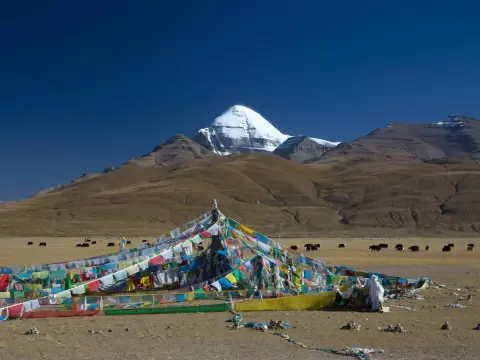
The Kailash Mansarovar Tour via Lhasa is a spiritually enriching journey that takes pilgrims and adventure seekers through the heart of Tibet to the sacred Mount Kailash and Lake Mansarovar. This 14-day expedition offers a perfect blend of cultural exploration, breathtaking Himalayan landscapes, and a deep spiritual connection, making it one of the most revered pilgrimage tours in the world.The journey begins with an arrival in Kathmandu, where travelers are greeted and transferred to their hotel. The evening allows for a leisurely walking tour around the lively streets of Thamel, filled with colorful shops, local eateries, and vibrant culture. The following day is dedicated to exploring the spiritual and historical landmarks of Kathmandu, including Pashupatinath Temple, Boudhanath Stupa, and Swayambhunath (Monkey Temple). These UNESCO World Heritage Sites provide insight into Nepal’s deep-rooted spiritual traditions and architectural grandeur. Later, a briefing session is conducted to ensure all participants are well-prepared for the upcoming adventure to Tibet.A breathtaking flight from Kathmandu to Lhasa offers panoramic views of the Himalayan range, including Mount Everest, Cho Oyu, and Makalu. Upon landing in Tibet’s capital at 3,650 meters, the day is set aside for rest and acclimatization to the high-altitude environment. The following day, Lhasa unfolds its mystical charm as travelers visit the Potala Palace, Jokhang Temple, and Barkhor Street. The Potala Palace, once the winter residence of the Dalai Lama, stands as a symbol of Tibetan culture and history. The spiritual atmosphere at Jokhang Temple, Tibet’s most sacred site, and the bustling Barkhor market provide an immersive cultural experience.Leaving Lhasa, the journey continues through the Tibetan plateau, offering stunning landscapes, high-altitude passes, and serene monasteries. The drive to Shigatse passes through Yamdrok Lake and offers glimpses of Karo La Glacier before arriving at the Tashilhunpo Monastery, the seat of the Panchen Lama. From Shigatse, the road leads toward Saga, crossing vast plains and mountain valleys. Along the way, travelers witness nomadic settlements, herds of yaks, and breathtaking Himalayan vistas.A spiritually significant part of the journey unfolds upon reaching Lake Mansarovar, considered one of the holiest lakes in Hinduism and Buddhism. The turquoise waters, set against the backdrop of snow-capped peaks, create a deeply peaceful and meditative environment. Pilgrims perform rituals and take a holy dip in the lake, believed to cleanse sins and bring spiritual enlightenment. After time spent absorbing the divine energy of Mansarovar, the journey continues to Darchen, the base camp for Mount Kailash.The Kailash Parikrama, or circumambulation, begins from Darchen, marking the start of a challenging yet spiritually rewarding trek. The trail leads to Derapuk Monastery (4,900m), offering a breathtaking first close-up view of Mount Kailash’s north face. The next phase of the trek is the most demanding, as it involves crossing Dolma La Pass (5,645m), the highest point of the pilgrimage. This sacred pass is adorned with prayer flags, and the descent leads to Zutulpuk Monastery, where Milarepa, a famous Tibetan saint, is believed to have meditated.The final stretch of the trek completes the Kailash Parikrama, bringing travelers back to Darchen, from where they drive back to Saga. The return journey toward Nepal begins with a scenic drive to Kerong, near the Nepal-Tibet border. The landscape gradually transitions from the barren Tibetan plateau to the lush greenery of Nepalese valleys. Crossing the border, travelers continue the drive to Kathmandu, reliving the incredible experiences of the sacred journey. The tour concludes with a final day in Kathmandu, offering time for reflection and exploration before departure.This pilgrimage is more than just a physical journey; it is a deeply spiritual and transformative experience, offering unparalleled natural beauty and divine energy. With expert guidance from Nepal Adventure Pilgrimage Treks & Expedition, travelers can explore on this once-in-a-lifetime journey with the assurance of a well-organized and enriching experience.Major Viewpoints of the TripThe Kailash Mansarovar Tour via Lhasa is a visually stunning journey that offers breathtaking views of the Himalayan mountain range, sacred lakes, and high-altitude Tibetan landscapes. One of the most incredible highlights is the flight from Kathmandu to Lhasa, where travelers can witness panoramic aerial views of Mount Everest (8,848m), Cho Oyu (8,188m), Makalu (8,481m), and Shishapangma (8,027m). This scenic flight sets the tone for the entire pilgrimage, offering a glimpse of the majestic peaks that dominate the Tibetan Plateau.During the overland journey, travelers will cross several high mountain passes that provide spectacular viewpoints. The Karo La Pass (5,010m), situated between Lhasa and Shigatse, offers stunning views of the Karo La Glacier, while the Lalung La Pass (5,200m) presents vast, open landscapes that stretch endlessly into the horizon. Another major highlight is Lake Mansarovar (4,590m), where pilgrims are blessed with the first glimpse of Mount Kailash, its perfectly symmetrical shape standing majestically above the Tibetan Plateau.The Mount Kailash Parikrama (Kora) is the spiritual and physical highlight of the tour. The best viewpoints along this trek include Derapuk Monastery (4,900m), which provides the best north face view of Mount Kailash, and Dolma La Pass (5,645m), the highest point of the trek. From this sacred pass, travelers can see Gauri Kund (Lake of Compassion), another holy site for Hindu pilgrims. Each of these viewpoints offers awe-inspiring sights and deepens the spiritual significance of the journey.Major Attractions: Natural, Cultural & VillagesThis pilgrimage is a blend of natural wonders, cultural heritage, and remote Tibetan settlements. The journey begins in Lhasa, the spiritual heart of Tibet, where travelers visit world-famous sites like the Potala Palace, Jokhang Temple, and Barkhor Street. Potala Palace, the former winter residence of the Dalai Lama, showcases Tibetan Buddhist architecture, intricate murals, and religious artifacts. The Jokhang Temple, considered the holiest temple in Tibet, is always bustling with devotees performing clockwise circumambulations (kora).Beyond Lhasa, the road trip through Tibet showcases pristine lakes, vast plains, and snow-capped mountains. One of the most mesmerizing sights is Lake Mansarovar, considered the holiest lake in Hinduism and Buddhism. Pilgrims take ritual baths in its crystal-clear waters, believed to cleanse sins and purify the soul. The drive also passes through small Tibetan villages and nomadic settlements, where travelers can witness the traditional lifestyle of Tibetan herders, who live in yurts (tent houses) and rely on yaks for livelihood.During the Mount Kailash Kora, travelers pass by ancient monasteries, prayer wheels, and Buddhist chortens (stupas). The Derapuk and Zutulpuk monasteries are important spiritual sites along the trek, offering insight into the meditative traditions of Tibetan Buddhism. Along the way, one can see prayer flags fluttering in the wind, symbolizing peace and harmony. The entire journey provides an opportunity to immerse oneself in Tibetan culture, religious devotion, and the untouched beauty of nature.Best Time for Kailash Mansarovar Tour via LhasaThe ideal time to explore on the Kailash Mansarovar Tour via Lhasa is during spring (April–June) and autumn (September–October). These seasons offer clear skies, stable weather, and moderate temperatures, making travel and trekking conditions more comfortable. During these months, the views of Mount Kailash, Lake Mansarovar, and the Tibetan Plateau are at their best.The summer months (July–August) are also possible for travel, but Tibet experiences occasional monsoon showers, which can make roads muddy. However, this is also the time of the Saga Dawa Festival, a sacred Tibetan Buddhist festival celebrating the birth and enlightenment of Lord Buddha. Many pilgrims choose to visit during this time to experience the spiritual energy and vibrant ceremonies.Winter (November–March) is not recommended due to extreme cold, heavy snowfall, and travel restrictions in certain areas. The high-altitude passes become challenging, and many local accommodations close during this period.Difficulty Level of Kailash Mansarovar Tour via LhasaThis tour is considered moderately challenging due to high altitude and the three-day Kailash Kora (parikrama). While the trip does not involve technical climbing, the thin air and altitude sickness can make the journey difficult, especially during the Dolma La Pass (5,645m) crossing. Proper acclimatization in Lhasa and gradual altitude gain help reduce the risks.Physical fitness is essential, especially for the Mount Kailash trek, which includes steep ascents and rocky trails. Walking 6–8 hours a day at high altitude requires stamina. However, for those unable to complete the trek, horses and yaks can be hired for assistance. Despite the challenges, with proper preparation and a slow pace, travelers of all ages complete this pilgrimage.Food & Accommodations During the TripAccommodation varies throughout the tour. In Lhasa, Shigatse, and Saga, travelers stay in comfortable 3-star hotels with modern amenities like hot showers, Wi-Fi, and Western-style toilets. As the journey moves into remote areas like Darchen and along the Kailash Kora, accommodation becomes more basic, with guesthouses and dormitory-style stays offering simple bedding and limited facilities.Food options include Tibetan, Nepalese, Chinese, and limited Western cuisine. Meals typically consist of noodles, rice, vegetable soups, momos (dumplings), yak meat, and Tibetan butter tea. In remote areas, options become basic, so carrying snacks like energy bars, nuts, and dry fruits is recommended. Drinking bottled or purified water is essential to avoid altitude sickness.Network & CommunicationsWi-Fi and mobile networks are available in Lhasa, Shigatse, and Saga, but in remote areas like Mansarovar, Darchen, and during the trek, connectivity is limited or unavailable. Chinese SIM cards can be purchased in Lhasa for better local coverage, but foreign social media platforms like Google, Facebook, and WhatsApp are restricted. Using a VPN (installed before entering China) can help access these services.Weather ConditionsTibet’s weather is cold and dry year-round, with temperatures varying significantly between day and night. During spring and autumn, daytime temperatures range between 10–15°C, while nights can drop to -5°C to -10°C. Summer offers slightly warmer temperatures, but nights remain cold. Winter is extremely harsh, with temperatures falling to -20°C or lower, making travel difficult. Strong winds and high UV radiation due to altitude require proper clothing and sun protection.Why Choose This Tour with Nepal Adventure Pilgrimage Treks & Expedition?Nepal Adventure Pilgrimage Treks & Expedition provides a well-organized, safe, and spiritually fulfilling Kailash Mansarovar journey. With years of experience in Tibet tours and pilgrimage treks, we handle all logistics, including permits, accommodations, transportation, and expert guides. Our itinerary ensures proper acclimatization and a balanced mix of spiritual exploration and scenic beauty.Our team includes experienced Tibetan and Nepali guides, well-versed in Tibetan culture, Buddhism, and high-altitude travel. We prioritize small group sizes for personalized care, ensuring a comfortable and meaningful journey. Our excellent service and attention to detail make this once-in-a-lifetime pilgrimage a smooth and unforgettable experience.For a spiritual adventure to Mount Kailash and Mansarovar, Nepal Adventure Pilgrimage Treks & Expedition is your trusted travel partner. Let us guide you on this sacred journey of faith, self-discovery, and breathtaking beauty.
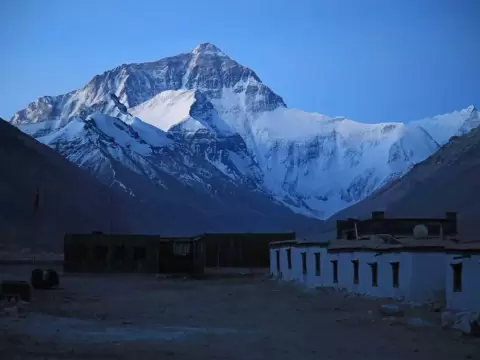
The Kathmandu Tibet Everest Base Camp Tour is a once-in-a-lifetime adventure that combines Nepal’s vibrant cultural heritage with Tibet’s mystical landscapes and culminates at the world’s highest base camp on the northern face of Mount Everest. This journey takes you through the spiritual heart of Kathmandu and Lhasa, the breathtaking Himalayan plateaus, and the historical cities of Gyantse and Shigatse, offering an immersive experience of Tibetan Buddhism, ancient monasteries, and stunning natural scenery.The journey begins in Kathmandu, where travelers are welcomed and transferred to their hotel to relax before diving into Nepal’s rich cultural heritage. The exploration starts with a guided tour of Kathmandu Durbar Square, home to ancient temples and royal palaces, followed by a visit to Patan Durbar Square, known for its intricate Newari architecture. The spiritual experience continues at Swayambhunath (Monkey Temple), a revered Buddhist stupa with panoramic views of the Kathmandu Valley. The next day, the journey extends to Bhaktapur, an ancient city with medieval squares and traditional craftsmanship. Visits to Pashupatinath, Nepal’s most sacred Hindu temple, and Boudhanath, one of the largest stupas in the world, provide a deep insight into the country’s religious diversity. A free day in Kathmandu allows travelers to explore its vibrant markets, shop for souvenirs, and prepare for the adventure ahead.A breathtaking flight from Kathmandu to Lhasa offers stunning views of the Himalayan range, including Mount Everest. Upon arrival, the high-altitude experience begins with acclimatization, allowing travelers to adjust to Tibet’s unique environment. The cultural exploration of Lhasa includes visits to the Potala Palace, the former residence of the Dalai Lama, and Sera Monastery, where lively debates between monks showcase Tibetan Buddhist traditions. Norbulingka Palace, the Dalai Lama’s summer retreat, provides a glimpse into Tibet’s royal history. The following day’s itinerary includes the Drepung Monastery, once the largest in Tibet, and the sacred Jokhang Temple, the spiritual heart of Lhasa. A walk through Barkhor Street, a bustling pilgrimage circuit, offers an authentic taste of Tibetan culture.Leaving Lhasa, the journey heads toward Gyantse, passing through the breathtaking Yamdrok Lake and high-altitude passes such as Kora La (5,010m) and Kamba La (4,794m), offering panoramic views of Tibet’s rugged terrain. In Gyantse, visits to the Kumbum Monastery and Tashilhunpo Monastery in Shigatse, the traditional seat of the Panchen Lama, showcase Tibet’s deep spiritual roots. The adventure continues with a scenic drive to Rongbuk, home to the highest monastery in the world, offering unparalleled views of Mount Everest’s northern face. The experience at Everest Base Camp (Tibet side) is truly unforgettable, standing beneath the world’s highest peak. From Rongbuk, the journey proceeds to Kerung (Gyirong), near the Nepal-Tibet border, before crossing back into Nepal and returning to Kathmandu. A free day in Kathmandu allows time for reflection before concluding the journey with memories that will last a lifetime.Major Viewpoints of the TripThe Kathmandu Tibet Everest Base Camp Tour offers some of the most breathtaking viewpoints in the world. The journey begins with the scenic flight from Kathmandu to Lhasa, providing an aerial view of the Himalayan range, including Mount Everest, Lhotse, Makalu, and Cho Oyu. This spectacular flight alone makes the trip unforgettable.As the journey continues through Tibet’s high-altitude landscapes, travelers will pass through Yamdrok Lake, one of Tibet’s most beautiful turquoise lakes, surrounded by snow-capped peaks. High mountain passes like Kora La (5,010m) and Kamba La (4,794m) offer panoramic views of the vast Tibetan plateau. The ultimate highlight of the trip is reaching Rongbuk Monastery, the highest monastery in the world, which provides an unparalleled view of Mount Everest’s northern face. Unlike the southern side in Nepal, the Tibet side offers a full frontal view of Everest’s towering peak, making it a dream destination for adventurers and photographers alike.Major Attractions: Natural, Cultural, and VillagesThis tour blends natural wonders, cultural exploration, and traditional Tibetan villages. In Nepal, the adventure begins in Kathmandu Valley, home to UNESCO World Heritage Sites, including Kathmandu Durbar Square, Patan, Bhaktapur, Pashupatinath, Boudhanath, and Swayambhunath (Monkey Temple). These sites showcase Nepal’s rich history, artistic architecture, and deep-rooted spiritual traditions.Upon arrival in Lhasa, travelers explore the Potala Palace, the former residence of the Dalai Lama, a masterpiece of Tibetan architecture. Other highlights include Jokhang Temple, the spiritual center of Tibet, and Sera & Drepung Monasteries, where Buddhist philosophy and debates come to life. Barkhor Street offers a glimpse into Tibetan daily life, with locals performing kora (circumambulation) around the temple.Leaving Lhasa, the journey passes through Tibetan villages, high-altitude lakes, and dramatic landscapes. The route to Gyantse and Shigatse allows travelers to experience the Tashilhunpo and Kumbum Monasteries, both significant religious centers. The final stretch to Everest Base Camp (Tibet side) leads to Rongbuk Monastery, where the stunning view of Mount Everest’s northern face stands as the grand finale of this incredible journey.Best Time for Kathmandu Tibet Everest Base Camp TourThe best time for this tour is spring (April to June) and autumn (September to November). During these months, the weather is stable, skies are clear, and the visibility is excellent for viewing the Himalayan peaks.In spring, the Tibetan plateau comes alive with mild temperatures and blooming landscapes. This season is ideal for photography, as the blue skies contrast beautifully with the snow-covered mountains.In autumn, after the monsoon rains, the air is fresh, and the skies remain crystal clear, offering perfect conditions for exploring Everest Base Camp and Lhasa. While winter (December to February) brings extreme cold and snowfall, and summer (July to August) experiences occasional monsoon rains in Nepal, these seasons are less ideal for travel.Kathmandu Tibet Everest Base Camp Tour Difficulty LevelThis tour is considered moderately challenging, mainly due to the high altitude and long driving distances. Although there is no technical climbing, the highest point of the trip is Everest Base Camp (5,200m), and the journey involves crossing multiple high passes above 5,000m.Travelers must acclimatize properly in Lhasa to avoid altitude sickness. The itinerary is designed with gradual altitude gain, giving the body time to adjust. Basic fitness and good health are essential, as some days involve long drives on rough roads. However, with proper preparation, most travelers can comfortably complete this tour.Food & Accommodations During the TripIn Kathmandu and Lhasa, travelers stay in comfortable hotels with modern amenities. These cities offer a variety of Nepali, Tibetan, and international cuisine, with options for vegetarian and non-vegetarian meals.As the journey moves into rural Tibet, accommodation becomes more basic. In Gyantse, Shigatse, and Rongbuk, lodging is in simple guesthouses or lodges, often with shared facilities. At Everest Base Camp (Tibet side), accommodations are very basic, but the breathtaking view of Mount Everest compensates for the simplicity.Meals in Tibet mainly include Tibetan and Chinese dishes, with options like thukpa (noodle soup), momo (dumplings), yak meat, and fried rice. Hot tea and soup are commonly served to help travelers stay warm at high altitudes.Network & CommunicationsInternet and mobile networks are available in Kathmandu and Lhasa, with Wi-Fi access in hotels and restaurants. However, as the journey moves into rural Tibet, network coverage becomes limited. In remote areas like Everest Base Camp, mobile signals are weak or nonexistent.Travelers can purchase a Chinese SIM card in Lhasa for better connectivity, though some international websites may be restricted. Carrying a satellite phone can be an option for those needing reliable communication in remote areas.Weather ConditionsThe weather varies greatly depending on the season and altitude. In Kathmandu (1,300m) and Lhasa (3,650m), temperatures are moderate, ranging from 10°C to 25°C in spring and autumn.As the journey moves toward Everest Base Camp (5,200m), temperatures drop significantly. Daytime temperatures range between 5°C to 15°C, while nights can be freezing, reaching as low as -10°C to -15°C. Winds can be strong, and the air is dry, so proper warm clothing, hydration, and skincare are necessary.Why Choose Kathmandu Tibet Everest Base Camp Tour with Nepal Adventure Pilgrimage Treks & Expedition?Choosing Nepal Adventure Pilgrimage Treks & Expedition ensures a well-organized, safe, and enriching journey. With years of experience in Tibet tours, the company provides:Expert guidance & professional support – Knowledgeable guides who share in-depth cultural and historical insights.Well-planned itinerary – Enough time for acclimatization and smooth travel arrangements.High-altitude safety measures – First aid, oxygen cylinders, and experienced staff for emergency assistance.Authentic cultural experiences – Visits to remote Tibetan villages, monasteries, and interactions with locals.Seamless logistics – Hassle-free permits, comfortable accommodations, and reliable transportation.Explore this once-in-a-lifetime journey to explore Nepal’s heritage, Tibet’s spirituality, and the grandeur of Mount Everest with Nepal Adventure Pilgrimage Treks & Expedition – your trusted travel partner for Himalayan adventures!Everest Region Travel & Adventure Blog HighlightsAmazing Facts About on the Everest Base Camp TrekA Complete Guide to Everest Base Camp Trekking from May to Marchwhy we trek to nepal adventure pilgrimage with everest base camp?Top Highlights of the Everest View Short TrekEverest Three Passes Trekking in Nepal: Crossing Kongma La, Cho La and Renjo La Adventure Above 5,000mLangtang Trekking vs Everest Panorama TrekkingBest Time To Visit Everest Base Camp TrekGet ultimate trekking experience in the Everest region Trek 2022Tenzing Hillary AirportSherpa Villages and Everest Region: Must Do Trek in Nepal!Top 3 Treks to do in Autumn Season in NepalMake Your Trip More Unforgettable With Adventurous ThingsTrekking in Nepal in AugustTrekking In Nepal In MayTrekking in Nepal in AprilTrekking In Nepal In October 2022/2023Trekking in Nepal in September10 Most Beautiful Places In Nepal That You Should Visit OnceTour Packages in Nepal - How to get the Best?Trekking in the thin Air you can do it,with Nepal Adventure Pilgrimage TrekTop Hidden Gems in Nepal to Explore in 2026
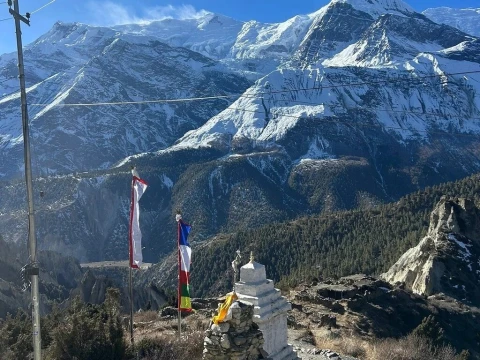
With a reputation of being one of the most beautiful trekking trails in the world, our Annapurna Circuit Trek 18 days will not disappoint anyone exploring the region. Travelers have been observing the glorious views of Annapurna and Chu lu range since it was opened for trekking in 1977 A.D. The dramatically changing landscapes as we begin our trek from Chyamje (1,430m) is admired by everyone instead of driving up the valley to minimize the trekking days.Annapurna Circuit Trek by Nepal Adventure Pilgrimage Treks is prepared by expert guides because of whom you will not miss anything that this trail has to offer. The vegetation changes drastically from dense Oak forest to Pine forests and finally onto a Himalayan desert. As we gain altitude the landscape turns drier and the mountains seem huge as we approach them.The mixture of people living throughout the trail also offers a lot of new experience and an opportunity to get in contact with their diversified culture. On the beginning part of the trail (i.e. Bahundanda, Chamje) you will see Bhramins people followed by villages inhabited by Magar community in Chame, Tal, Dharapani. The last settlements of the trail are mostly inhabited by the Sherpa community reflecting preserved Buddhist culture.This Annapurna Region Trek is regarded as a demanding trek as you will be crossing a trekking pass above 5,416 meters which requires some good level of physical fitness. All your hard work would be compensated by sceneries of Annapurna II, III, IV, Lamjung Himal, Gangapurna, Pisang Peak, Chu lu East, Chulu West, Thorong Peak, Dhaulagiri and many other surrounding peaks of Classic Annapurna Circuit Trek region.Annapurna Circuit Trek with Adventure treks Nepal will not end after you cross the Thorong La Pass as we have extended the trek further towards Poonhill where you will have one last 180 degree view of Annapurna Range before heading towards Pokhara. However, according to your reference we can arrange a flight from Jomsom as well.While you are in Muktinath our guides will also take you to visit a Holy Hindu Temple where it is believed all your sins would be removed if you take a bath in all its 108 taps and deep in two pools in front of the main temple.