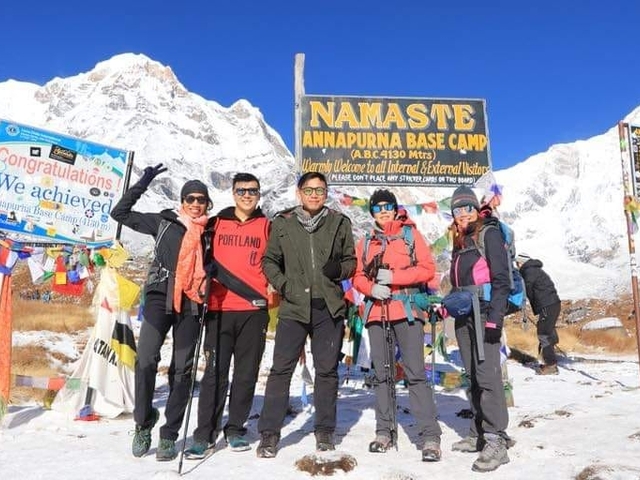
"Experience the breathtaking beauty of the Himalayas and immerse yourself in the rich cultural heritage of Nepal on the legendary Annapurna Base Camp trek. Join our Annapurna base camp trek 2023/2024 departure and trek with native guides & porters. We have the best Annapurna base camp trek cost with top-notch service, guaranteed departure, and 100% safety assurance."Nestled in the western reaches of Nepal, Mount Annapurna (8,091 m/26,545 ft) is the tenth-highest mountain in the world. The Annapurna base camp trek is a multiple-day hike through rhododendron forests and remote villages to the lap of Mt. Annapurna. If you're looking for a trek that truly showcases the beauty of the Himalayas, then the Annapurna Base Camp is definitely one to consider. From the very start of the Annapurna base camp hike, you'll be surrounded by stunning Himalayan mountains, making it no surprise that this 13-day-long adventure is a popular choice for many travelers. One of the best things about the Annapurna base camp trekking is that it's suitable for all age groups and abilities. Whether you're traveling with children or simply looking for a moderate trek, the Annapurna Base Camp trek in Nepal offers a comfortable walking experience with plenty of breathtaking scenery and cultural immersion.As you ascend towards the Annapurna Base Camp via the Machhapuchhre Base Camp, you'll be rewarded with stunning views of the majestic Mt. Machhapuchhre (6,993 m/22,943 ft), Mt. Hiunchuli (6,441 m/21,132 ft), Annapurna South (7,219 m/23,684 ft), Annapurna I (8,091 m/26,545 ft), Annapurna III (7,555 m/24,787 ft), Mt. Gangapurna (7,455 m/24,459 ft), Mt. Nilgiri (7,061 m/23,166 ft), Mt. Dhaulagiri (8,167 m/26,795 ft), etc.But it's at the Annapurna Sanctuary where you'll truly be blown away. Here, you'll enjoy a 360-degree panorama of the snow-clustered mountains, with a near-vertical view of the south face of the Annapurna towering above. And you will enjoy several gorgeous sunrises and sunsets during the Annapurna base camp trek 13 days.As you trek through the Annapurna Conservation Area, you'll traverse a diverse landscape that includes verdant oak, pine, and rhododendron forests, and green rice paddies. Against the backdrop of misty valleys and rolling hills, the snow-capped peaks sparkle like diamonds. Along the Annapurna base camp trail, you'll come across picturesque Gurung and Magar villages and experience mountain life. From the starting point of the Annapurna base camp trek at Nayapul (1,070 m/3,510 ft), the trail ascends to Poon Hill (3,210 m/10,525 ft) and continues to Annapurna Base Camp (4,130 m/13,550 ft). The elevation gain is high, so you have to be careful of altitude sickness and make sure to acclimatize properly.Is Annapurna base camp trek hard?The Annapurna base camp trek is considered a moderate trek in terms of difficulty, but it still requires a certain level of physical fitness and preparation. The Annapurna base camp trek route can be challenging at times, with steep ascents and descents. The trek involves crossing several suspension bridges over deep gorges, walking through lush forests, and climbing stone steps.Altitude sickness can be a concern during the Annapurna base camp trekking, especially as you gain altitude. The base camp is at an elevation of 4,130 meters (13,550 feet), which can cause altitude sickness in some trekkers. Therefore, acclimatize properly and take rest days to adjust to the altitude. Drinking plenty of water, avoiding alcohol and smoking, and eating a balanced diet can also help prevent altitude sickness.Annapurna base camp trek preparationThe Annapurna base camp trek in Nepal requires physical fitness and mental preparation. You should engage in regular exercise and cardio workouts for several weeks before the trek to build stamina and endurance. You can also do some hill walking and practice carrying a backpack to prepare for the trek. Mental preparation is also important, as the trek can be mentally challenging too. You should be prepared for long days of walking and be able to handle the uncertainty and discomfort that comes with trekking in remote areas.Annapurna base camp trek vs Everest base camp trekThe Annapurna base camp (ABC) trek and Everest base camp (EBC) trek are two of the most popular treks in Nepal. Both of these treks offer a unique experience, with different landscapes, cultural immersion, and challenges. The EBC trek is considered more challenging than the ABC trek. The altitude gain in the EBC trek is higher, and the trek requires more physical endurance and stamina. The ABC trek, on the other hand, is comparatively easier and is suitable for beginners.The Everest base camp trek offers a chance to experience the unique Sherpa culture, including their traditional lifestyle and hospitality. Whereas, the Annapurna base camp trek offers a glimpse into the Gurung and Magar cultures, known for their rich traditions and hospitality. Likewise, both treks offer breathtaking scenery, but they are different in nature. Other base camp treks in Nepal and alternative trekking packagesNepal is home to hundreds of mountains, including the world's top 8 highest mountains. So, you can do base camp treks to those 8 eight-thousanders mountains. Apart from the Annapurna base camp and Everest base camp, you can do Manaslu base camp trek, the Kanchenjunga base camp trek, the Makalu base camp trek, and the Dhaulagiri base camp trek too. Likewise, these are some of our other famous trekking packages in the Himalayas- Upper Mustang trek, Langtang Gosaikunda trek, Annapurna Circuit trek, Manaslu Circuit trek, Rara Lake trek, and Gokyo Lake trek.Best time to do Annapurna base camp trekkingSpring (March, April, May) and autumn (September, October, November) is the best time to do the Annapurna base camp trekking. Whereas, winter (December, January, February) and summer/monsoon (June, July, August) are the offtime for this trek. However, if you can put up with the additional challenges of the offseason, you can trek to Annapurna base camp in winter and summer/monsoon.Although certain months of the year are more favorable for trekking in terms of weather, it's crucial to be equipped for all possible conditions, no matter when you plan to go. The unpredictable weather conditions in the high Himalayas can bring unexpected snowfall, rain, or storms at any time, and climate change has only made weather patterns more erratic in recent years.In the mountains, it's always better to be over-prepared than under prepared, as the weather can change rapidly, and you may find yourself in challenging situations. Carrying essential trekking gear like a waterproof jacket, hat, gloves, and a warm sleeping bag is also a must. Annapurna base camp trek in springThe months of March, April, and May mark the arrival of spring in Nepal after the long, cold winter months. This colorful season is also considered one of the best times to embark on a trek to Annapurna Base Camp. The weather during springtime is perfect for trekking, as it's neither too hot nor too cold. The average daytime temperature ranges from 16 to 22 degrees Celsius or 61 to 68 degrees Fahrenheit, with a drop of around 2 to 3 degrees Celsius or 27 to 28 degrees Fahrenheit during the night.Annapurna base camp trek in autumnThe autumn months of September, October, and November are considered the second best time to trek to Annapurna Base Camp. This season offers trekkers an excellent opportunity to experience clear, crisp skies with high visibility. The weather is dry, and the chances of rainfall are minimal, providing an unobstructed view of the breathtaking Himalayas.During the daytime, the average temperature ranges from 16 to 22 degrees Celsius or 54 to 68 degrees Fahrenheit. The mornings and nights can be chilly, while the days are warm and sunny, making for perfect trekking weather. However, the nighttime temperature can drop to 25 to 27 degrees Celsius or 77 to 81 degrees Fahrenheit, so trekkers should be prepared with warm clothing.Annapurna base camp trek difficulty The Annapurna Base Camp trek is a popular and challenging venture in the Annapurna region of Nepal. The trek difficulty is considered to be moderate. The ABC trek requires a good level of fitness, as you will be trekking for around 10-12 days and ascending to an altitude of 4,130 meters (13,550 feet) at Annapurna Base Camp. The trail can be steep and rocky in some sections, and you have to prepare for 5 to 6 hours of walking each day. Despite the standard challenges, the Annapurna base camp trek is suitable for most people with a good level of fitness and some trekking experience.The trek begins through lush forests and terraced rice paddies, passing through traditional villages and remote mountain communities. As you ascend higher, the terrain becomes more rugged, with rocky trails and steep switchbacks leading up to Annapurna Base Camp. The trek is mostly on well-maintained trails, but some sections can be rocky and uneven, requiring good trekking boots and trekking poles.Altitude SicknessLikewise, you may have heard about altitude sickness or acute mountain sickness. If not, usually trekkers suffer from this during high-altitude trekking like the Annapurna base camp. Symptoms of altitude sickness can include headache, nausea, dizziness, and shortness of breath.To prevent altitude sickness, you have to acclimatize properly by ascending slowly and taking rest days as needed. Drink plenty of water, stay hydrated, eat a balanced diet, and avoid alcohol and smoking. Accommodation & meals during the Annapurna base camp trekAnnapurna base camp trek is a lodge trek. Lodges serve as a much-needed break, offering comfortable housing and a variety of amenities at an affordable price. Typically established and run by local residents. Many lodges are strategically located at points along the trail where travelers can acclimate to the altitude and immerse themselves in the local communities. These humble accommodations typically offer wooden beds fitted with basic mattresses, pillows, and blankets. Guests can also enjoy the warmth of a Bukhari-style stove for heating, savor meals in communal dining areas, and even participate in lively musical performances using traditional instruments.The lodges lining the Annapurna Base Camp trail offer a tempting array of meals, with a menu that boasts an impressive range of options such as Dal Bhat, Momos, Spaghetti, French Fries, and more. If you're wondering what to order, your guide will likely recommend the hearty and nutritious Dal Bhat, which packs a whopping 430 calories per serving.PermitsIf you are planning to do the Annapurna Base Camp trek in Nepal, you will need to obtain two types of permits: the Annapurna Conservation Area Permit (ACAP) and the Trekkers' Information Management System (TIMS) card. You can obtain a TIMS card through a licensed guide, so trekking alone is no longer possible in Nepal. ●As of 2021, the fee for the ACAP permit is NPR 3,000 (approximately USD 25).●As of 2021, the fee for the TIMS card is NPR 1,000 (approximately USD 8.50).Travel insurance for the Annapurna base camp trekIf you are planning to do the Annapurna Base Camp trek in Nepal, it is highly recommended that you purchase travel insurance. Travel insurance will provide you with peace of mind and financial protection in case of unforeseen events such as illness, injury, flight cancellations, or other travel-related mishaps.Make sure that the insurance policy you choose provides adequate medical coverage. Look for a policy that covers emergency medical evacuation, hospitalization, and other medical expenses. You can also get coverage for trip cancellation or interruption, which can protect you if your trip is canceled or interrupted due to unforeseen events such as a family emergency, illness, or severe weather conditions.Nepal Travel Visa and Passport You will need a valid passport to enter Nepal. Your passport must be valid for at least six months from the date of your arrival in Nepal. If your passport is expiring soon, it is recommended that you renew it before applying for a visa.Nepali travel visa is available on all entry borders, including the Tribhuvan International Airport. You can also apply for a visa at a Nepalese embassy or consulate in your home country before your trip. The visa fee varies depending on the length of your stay in Nepal. As of 2021, the fee for a 15-day visa is USD 30, a 30-day visa cost is USD 50, and a 90-day visa cost is USD 125.you will need to bring the following●A valid passport●One passport-size photo●Completed visa application form (which can be obtained online or at the airport)●Visa fee (which can be paid in cash or by credit card)Travel tips for the Annapurna base camp trek●Luggage: We provide a duffel bag to every trekker to pack their heavy trekking clothes and gear. Make sure to keep your weight under 10 kg. Likewise, you can carry a daypack with you to keep the necessary items with you on the trail. Store any additional luggage in the hotel's locker room free of cost. ●ATM: There is no ATM on the Annapurna base camp trail, and the locals do not accept payments through cards. You will need some Nepali rupees for personal expenses during the trek. So, withdraw enough money in Kathmandu. ●Internet: To stay connected to your family, opt to purchase a Namaste SIM card for 4G connections, which tends to provide a more reliable and speedy connection than lodge’s Wi-Fi. However, it's worth noting that even with a SIM card, you may still encounter areas with poor or no signal.●Charging: Many lodges at higher altitudes rely on solar energy for lighting and power. While this is generally a sustainable and reliable source of energy, it can be impacted by poor weather conditions, particularly during the rainy and winter seasons. To ensure you're not left in the dark and to keep your devices charged, we advise you to bring along a reliable torch light and power bank.●Tips: Our ABC trek cost does not cover tips for guides, porters, and drivers. If you are happy with their service, feel free to tip them as you wish. ●Hot Shower: Hot showers are available at some lodges along the trekking route, but they often come at an additional cost and may not always be reliable. Wet wipes will come handy. ●Drinking Water: It's essential to drink plenty of water while trekking to prevent dehydration and altitude sickness. Bottled water is available along the trekking route, but it's not always reliable or environmentally friendly. A better option is to bring your own water bottle and use water purification tablets to treat the water before drinking. ●Personal Expenses: You will need extra money to buy services like internet, hot shower, charging, drinks, etc during the trek. Our Annapurna base camp trek cost covers all accommodations and meals. However, you have to pay for any additional service used during the trek. Likewise, you will also need a separate budget for internal light flights, travel insurance, tips, shopping, etc. Annapurna Region Travel & Adventure Blog HighlightsAnnapurna Base Camp Trek Weather 2023/2023Best Time to Visit Annapurna Base CampBest Time To Do Annapurna Circuit TrekAnnapurna Circuit Trek: A Beginner’s GuideExperience Himalayan Majesty: Annapurna Circuit and Upper Mustang TrekExploring Hidden Gems: Nar Phu Valley to Annapurna Circuit Trek 2026Exploring Tilicho Lake on the Annapurna Circuit TrekHighest Lakes in the World: Tilicho Lake & Thorong La Pass on the Annapurna Circuit TrekMajor Facts About the Annapurna Base Camp TrekTop 3 Treks to do in Autumn Season in NepalMake Your Trip More Unforgettable With Adventurous ThingsTrekking in Nepal in AugustTrekking In Nepal In MayTrekking in Nepal in AprilTrekking In Nepal In October 2022/2023Trekking in Nepal in September10 Most Beautiful Places In Nepal That You Should Visit OnceTour Packages in Nepal - How to get the Best?Trekking in the thin Air you can do it,with Nepal Adventure Pilgrimage TrekWhy Ghorepani Poon Hill Trek Is Perfect for Beginners in 2026
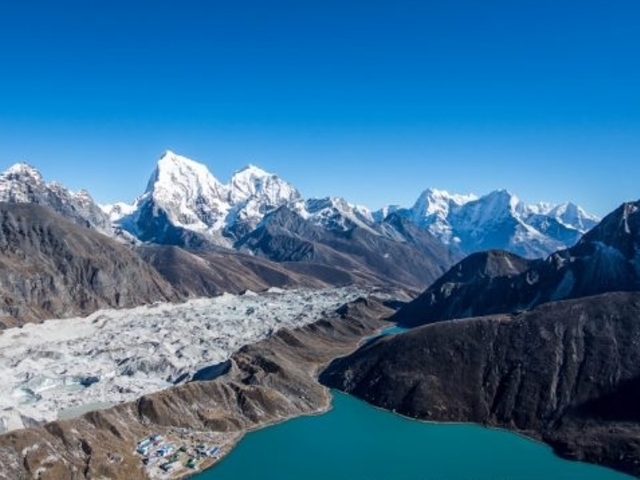
Gokyo Lake Trek is the best destination in the Everest region where you will be enjoying the awesome view of glorious mountains, glacier lakes, rhododendron forests, and so on. Also, you can observe the iconic town and the gateway of the Khumbu region-Namche Bazar.The trekking trails to the Gokyo Lake are less busy but still affords to attract the tourists with its local village life, amazing views of icy rivers, glaciers, snow-capped mountains, and crystal clear dazzling water and fresh air. This lake is made up of six factors of water and a lake which is situated at the elevation of 4,700 to 5,000m. Sagarmatha National Park also includes Gokyo Valley.Likewise, Gokyo lake trek is also known as the highest freshwater lake system in the world. This lake is designed as a Ramsar site and also important for Hindus and Buddhists. As if you spend extra days in Gokyo Valley, you can also explore 5th and 6th lakes which lie in the high altitude at the foot of Cho Oyu which is the 6th highest mountain in the world.Following the same, having hiked up to Gokyo RI (5,357 meters) offers you the amazing view of the highest mountain in the world, Mount Everest, Cho Oyu, Lhotse, and Makalu. Along with mountain views, you can also observe the biggest glaciers in this region, Ngozumpa, and ice ridges. Also, the amazing sunrise and sunset from the top of the hill is breath-taking.In order to acclimatize before starting your journey to Gokyo lake Trek valley, you will stay in Namche Bazar. Namche Bazar offers you the opportunity to trek near Khumbu and you can also hike to Hillary School which was made by Sir Edmund Hillary, who was the first person to summit the world’s highest mountain, Mount Everest, for the first time in history.Food and AccommodationEveryone is well known about the food and accommodation is not free at higher altitudes. Tea Houses and Lodges in the Everest region are basic. Yet, you are provided with healthy and hygienic food and drinks every day.The cost of Food and Accommodation depends on the altitudes. At lower altitudes, food and accommodation cost less, but at a higher elevation, it is difficult for the supply of food. People themselves, donkeys, and the yaks are the means of transportation for supplying food. Well, on average, a single meal costs you $8-$10. Also, the price depends on the variety which you’ve ordered.In the case of accommodation, you will be staying in the Tea House. This route is known as the teahouse trek route. The facilities that you get will depend on the altitude variation. In the lower region, you can find luxury and basic accommodation. But as the altitude increases, accommodation will be basic. Staying in a teahouse will cost nearly $6-$10 per person. Getting a single room at a higher altitude is rare. You will be provided with rooms in twin sharing basics.You are provided two single comfortable beds with a pillow and a warm blanket. It is better to carry your sleeping bag with you to make yourself warmer. You will not provide an extra blanket during peak season. There is less chance of getting the attached bathroom at a higher altitude. Also, you will not find toilet paper so better to carry it yourself.Guide and PorterWhile trekking to Everest Base Camp Cho La Pass Gokyo, taking a guide and porter with you is the best choice. This trek is difficult so that better hire a guide and porter. Approximately, you need to hike 5-6 hours per day while the trails are steep and slopy which is dangerous.A guide is a person who leads you to your destination providing you with a lot of entertainment and helps you to share your burden while you’re in trekking. A guide will always take care of you, making sure that you’re safe. He/She will always be there for you in case of any difficulties or emergencies. A well-experienced, government license guide will charge $30 per day.Similarly, a porter is someone who carries all your luggage safe and sound in trekking. You can be free and should not worry about your luggage. You can let him carry freely. An experienced porter will also charge $20 per day.Be sure about the rules for guide and porter. Suppose you got ill in the middle of the trek and could not complete it for any reason. In that case, you have to pay the full amount that owes for the whole trek. But if the guide gets ill then you should only pay up to that pay or you can exchange the guide.Permit required for Gokyo Lake TrekIf you are planning to do the Gokyo Lake Trek in Nepal, you will need to obtain certain permits before you can start your journey. Here are the permits that you will need:TIMS (Trekkers' Information Management System) Card: All trekkers must obtain a TIMS card, which is a mandatory permit for trekking in Nepal. The TIMS card can be obtained from the Nepal Tourism Board in Kathmandu or from the Trekking Agencies' Association of Nepal (TAAN).Sagarmatha National Park Entry Permit: The Gokyo Lake Trek falls within the Sagarmatha National Park, and as such, you will need to obtain a Sagarmatha National Park Entry Permit. This permit can be obtained from the Nepal Tourism Board or from the Sagarmatha National Park Office in Monjo.Gaurishankar Conservation Area Permit (if taking an alternate route): If you plan to take an alternate route from Namche Bazaar to Thame or Renjo La Pass, you will also need to obtain a Gaurishankar Conservation Area Permit. This permit can be obtained from the Nepal Tourism Board or from the Gaurishankar Conservation Area Project Office in Charikot.It's important to note that these permits may change and may also have different regulations depending on the current situation of the country. It is always best to check with your trekking agency or the concerned authorities for the most up-to-date information.Best Time to Visit Gokyo Lake Trek Nepal Trekking is possible throughout the year. However, the best window for the trekkers to visit Nepal for the walking holiday is spring and autumn season. During this season blooming flowers and clear make it fascinating for the trekkers.Moreover, trekking is to have the perfect vista and clear weather. Months of March – May and September – November are relatively clearer. The chance of cancellation is very low. If you are planning to do Everest Base Camp Trekking then these months are an ideal choice. You can book your trek according to your holiday plans throughout the year.Book the Gokyo Lake Trek in Nepal with us. You will be blessed with mesmerizing mountain vistas and overwhelmed by the impeccable hospitality of our crew members. Come and join us to knit the legendary travel tale of your lifetime at the most affordable price.Sagarmatha National Park Entry PermitWhile trekking in the Everest region, you have to pass through Sagarmatha National Park whichever route you follow. For that, having a Sagarmatha National Park Permit is necessary whenever you explore this region. Permits are checked at every checkpoint. The cost of a Sagarmatha National Park permit is $30 per person, including 13% VAT.Permits are very necessary documents for exploring any region of Nepal. It is checked in at every checkpoint throughout the trekking trails. This is for your safety. If you are found trekking in this region without permits, then you will be given punishment according to the law and should pay an extra charge. Necessary Permits are available in:Nepal Tourism Board, Kathmandu (Both permits are available)Pasang Lambhu Municipality, Lukla (Local Area Permit)Monjo Village (National Park Permit)Everest Region Travel & Adventure Blog HighlightsAmazing Facts About on the Everest Base Camp TrekA Complete Guide to Everest Base Camp Trekking from May to Marchwhy we trek to nepal adventure pilgrimage with everest base camp?Top Highlights of the Everest View Short TrekEverest Three Passes Trekking in Nepal: Crossing Kongma La, Cho La and Renjo La Adventure Above 5,000mLangtang Trekking vs Everest Panorama TrekkingBest Time To Visit Everest Base Camp TrekGet ultimate trekking experience in the Everest region Trek 2022Tenzing Hillary AirportSherpa Villages and Everest Region: Must Do Trek in Nepal!Top 3 Treks to do in Autumn Season in NepalMake Your Trip More Unforgettable With Adventurous ThingsTrekking in Nepal in AugustTrekking In Nepal In MayTrekking in Nepal in AprilTrekking In Nepal In October 2022/2023Trekking in Nepal in September10 Most Beautiful Places In Nepal That You Should Visit OnceTour Packages in Nepal - How to get the Best?Trekking in the thin Air you can do it,with Nepal Adventure Pilgrimage TrekTop Hidden Gems in Nepal to Explore in 2026
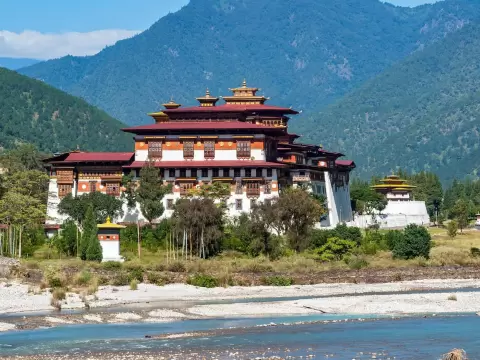
The Bhutan Cultural Tour is a journey through the mystical and spiritual heart of the last remaining Himalayan Kingdom. Bhutan, known as the "Land of the Thunder Dragon," is a country that has preserved its ancient traditions, Buddhist heritage, and unique way of life. Unlike any other destination, Bhutan’s cultural identity remains deeply intact, making it a perfect place for travelers seeking an authentic experience. This tour takes you through the country’s most significant cultural and historical sites, including Paro, Thimphu, Punakha, Trongsa, and Bumthang, each offering a fascinating glimpse into Bhutan’s past and present.Throughout the tour, visitors will explore breathtaking dzongs (fortresses), monasteries, and traditional villages, where they can witness the vibrant local lifestyle and spiritual essence of Bhutan. A highlight of the tour is the visit to Tiger’s Nest Monastery (Taktsang), one of the most iconic sites in Bhutan, perched dramatically on a cliffside. The journey also includes festivals, mask dances, traditional arts and crafts, and local cuisine, offering a truly immersive cultural experience. With its stunning landscapes, warm hospitality, and deep-rooted Buddhist traditions, Bhutan provides travelers with an unforgettable and soul-enriching adventure.Bhutan Cultural Tour with Kathmandu SightseeingAdding a Kathmandu sightseeing tour before heading to Bhutan enhances the overall travel experience. Kathmandu, Nepal’s cultural and historical hub, is home to breathtaking temples, stupas, and ancient royal palaces. The blend of Hindu and Buddhist traditions in Kathmandu serves as a perfect introduction to the spiritual atmosphere of Bhutan.During the sightseeing tour, travelers can visit Swayambhunath Stupa, also known as the Monkey Temple, which offers panoramic views of the valley. Another highlight is Boudhanath Stupa, one of the largest stupas in the world and a key pilgrimage site for Tibetan Buddhists. A visit to Pashupatinath Temple, a sacred Hindu temple dedicated to Lord Shiva, provides insight into Nepalese religious practices. Finally, the historic squares of Kathmandu, Patan, and Bhaktapur display exquisite Newari architecture and craftsmanship. After exploring Kathmandu, travelers take a scenic flight to Bhutan, where they explore on an extraordinary cultural journey.Best Time for Bhutan Cultural TourThe best time for a Bhutan Cultural Tour depends on the traveler’s preferences, as each season offers a unique experience. However, spring (March to May) and autumn (September to November) are considered the ideal seasons due to pleasant weather and vibrant cultural festivals.Spring brings blooming rhododendrons and lush green valleys, making it a visually stunning time to visit. The weather is mild, perfect for sightseeing and trekking to monasteries like the Tiger’s Nest. Autumn, on the other hand, is famous for its clear skies and major Bhutanese festivals such as the Thimphu Tshechu and Paro Tshechu. These festivals feature mask dances, traditional music, and religious performances, offering travelers a deep dive into Bhutan’s cultural traditions. Winter (December to February) provides a quieter experience with fewer tourists, and while it can be cold, the mountain views are spectacular. Summer (June to August) is the monsoon season, but it is still a good time to visit for those interested in lush landscapes and fewer crowds.Bhutan Cultural Tour PermitsTraveling to Bhutan requires special permits, as the country follows a strict tourism policy to preserve its culture and environment. Visitors must book their trip through a licensed Bhutanese tour operator or an international travel agency affiliated with a Bhutanese company. The government requires tourists to pay a Sustainable Development Fee (SDF), which contributes to Bhutan’s conservation and development.There are two main types of permits for Bhutan travelers: the Visa Clearance Letter and the Route Permit. The Visa Clearance Letter is obtained before arrival, and tourists must present it at the immigration checkpoint. The Route Permit is required for those traveling beyond Paro and Thimphu, covering destinations like Punakha, Trongsa, and Bumthang. The tour operator arranges all necessary permits in advance, ensuring a hassle-free travel experience.Food and Accommodation for Bhutan Cultural TourBhutan offers a unique culinary experience with a mix of traditional Bhutanese dishes, Tibetan influences, and Indian flavors. One of the must-try dishes is Ema Datshi, Bhutan’s national dish, made with chilies and cheese. Other popular dishes include Phaksha Paa (pork with red chilies), Jasha Maroo (spicy chicken stew), and Red Rice, which is a staple in Bhutanese cuisine. Most hotels and restaurants serve a variety of vegetarian and non-vegetarian options, ensuring a satisfying dining experience for all travelers.Accommodation in Bhutan ranges from standard hotels to luxurious resorts, all designed to reflect traditional Bhutanese architecture. In major cities like Thimphu, Paro, and Punakha, travelers can choose from 3-star to 5-star hotels with modern amenities. In remote areas like Bumthang and Trongsa, accommodations are more traditional, offering a cozy and authentic experience. No matter where you stay, the hospitality of the Bhutanese people ensures a warm and welcoming atmosphere.Why Choose Us for Bhutan Cultural Tour?At Nepal Adventure Pilgrimage Treks & Expedition, we specialize in curating authentic and immersive cultural tours in Bhutan. With years of experience in Himalayan travel, we ensure that every aspect of your journey is well-planned and enriching. Our expert guides are well-versed in Bhutan’s history, traditions, and spiritual heritage, providing deep insights into each destination.We handle all the logistics, from visa arrangements to accommodations and transportation, so travelers can focus on enjoying their trip. Our itineraries are flexible, allowing travelers to explore Bhutan at their own pace while ensuring they don’t miss key cultural and historical sites. Whether you want to witness the grandeur of Bhutan’s festivals, trek to sacred monasteries, or experience the serenity of its landscapes, we craft personalized journeys to meet your interests.Why Choose Nepal Adventure Pilgrimage Treks & Expedition?Nepal Adventure Pilgrimage Treks & Expedition is a trusted name in adventure and cultural tourism, offering tailor-made tours across Nepal, Bhutan, and Tibet. Our team comprises experienced travel experts, licensed guides, and local professionals dedicated to providing high-quality service.What sets us apart is our commitment to sustainable and responsible tourism. We prioritize eco-friendly travel practices, support local communities, and ensure that our tours respect the cultural and natural heritage of each destination. Our customers appreciate our personalized approach, transparent pricing, and attention to detail, making every journey memorable. Whether you are a solo traveler, a couple, or a group, we guarantee a seamless and enriching travel experience with us.